FlintLeap
A 3D clockwork platformer on the Flint engine. You play Cog, a wind-up automaton in a great hall that has almost stopped. Every sprocket you bring home warms the light, spins up the giant gears and moves the Great Clock one minute closer to midnight.
Clips
The hall winds up
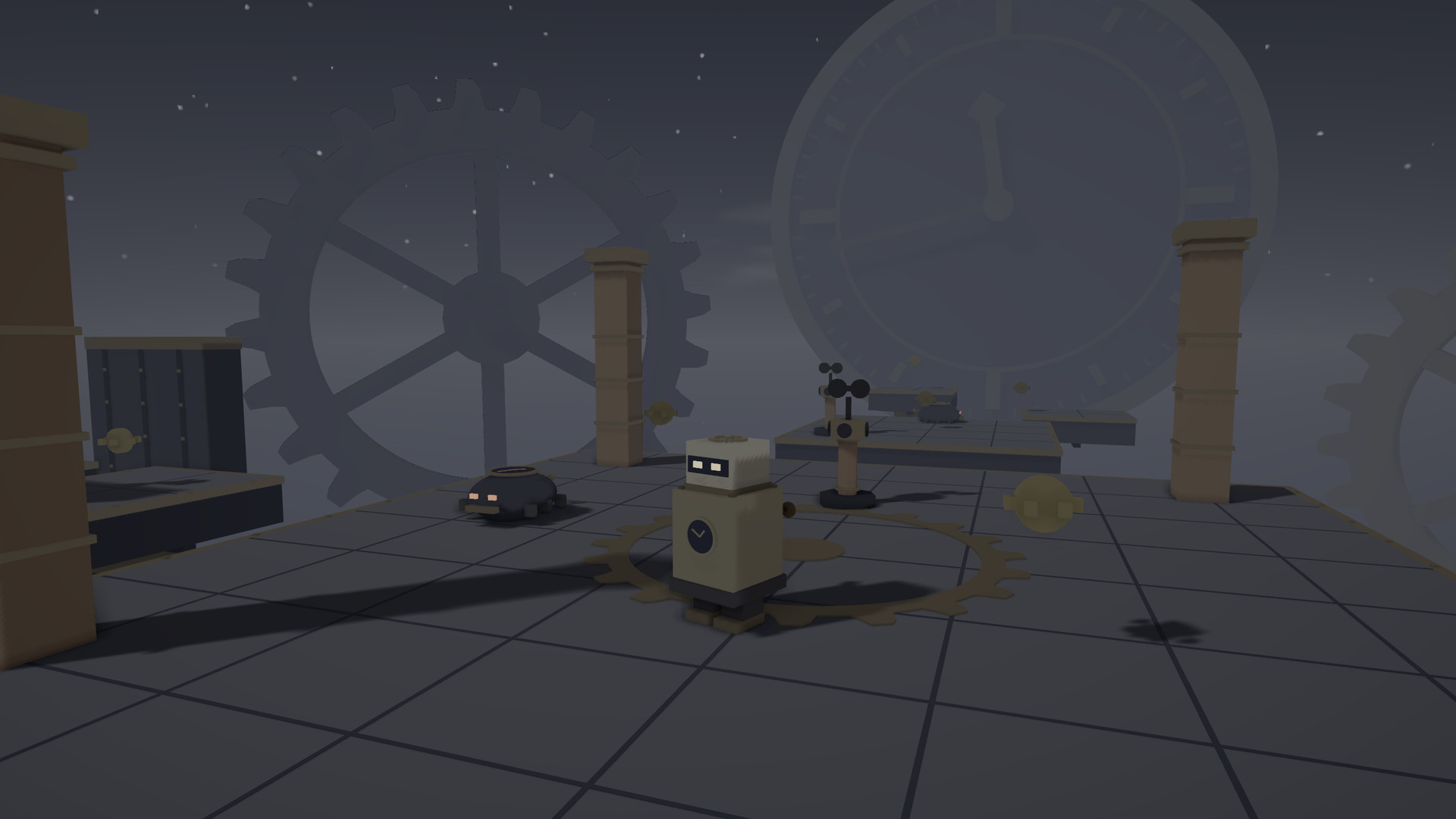
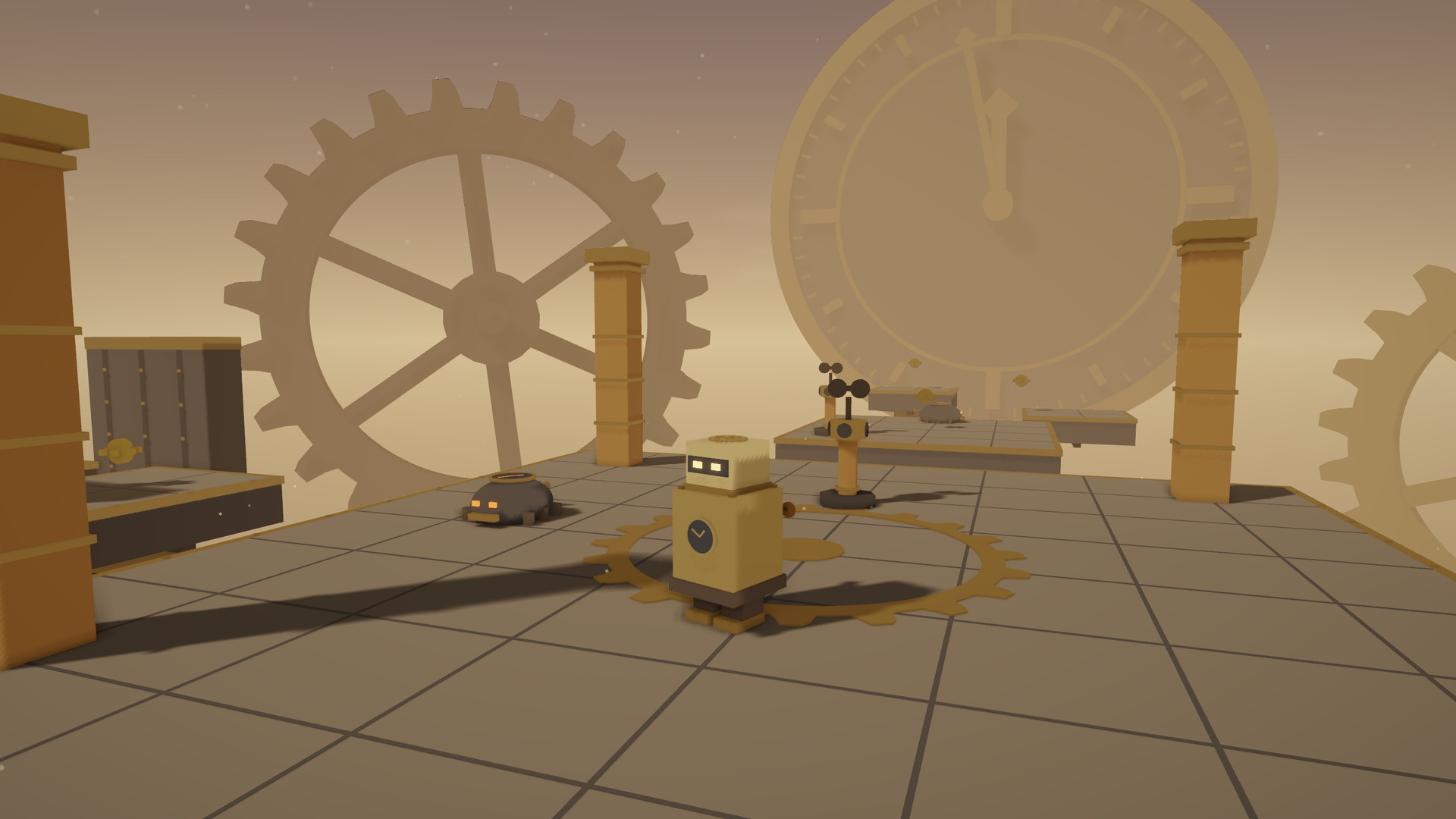
The whole arc in a few seconds. Here fifteen sprockets come home at once, so the change that normally builds over a run plays out together. The fog warms from blue-grey to brass, the colour comes back, the great gears in the abyss spin up, and the Great Clock's minute hand ratchets toward midnight, one tock per sprocket.
Pound the plate
At the end of the west corridor, a ground pound on the brass plate wakes a mechanism. A rack girder climbs out of the abyss and locks into place as a bridge to the Lost Ledge, where one of the corridor's sprockets waits.
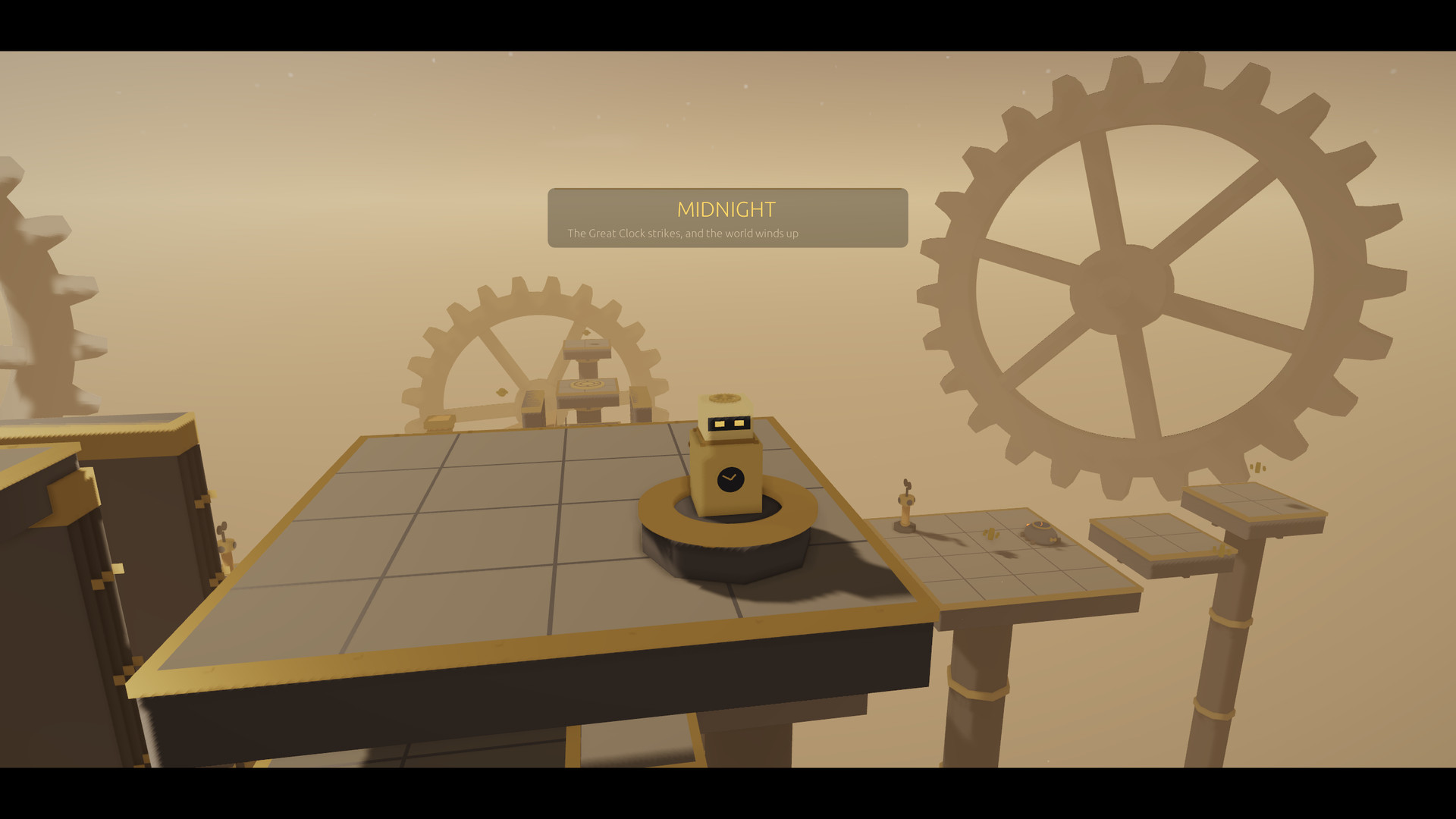
Midnight
With twelve sprockets home, the Mainspring Fragment's cage sinks into its pedestal atop the east tower. Taking it fully winds the world, the Great Clock strikes twelve with three tolls of a synthesized tower bell, and the camera circles the tower.
Screenshots
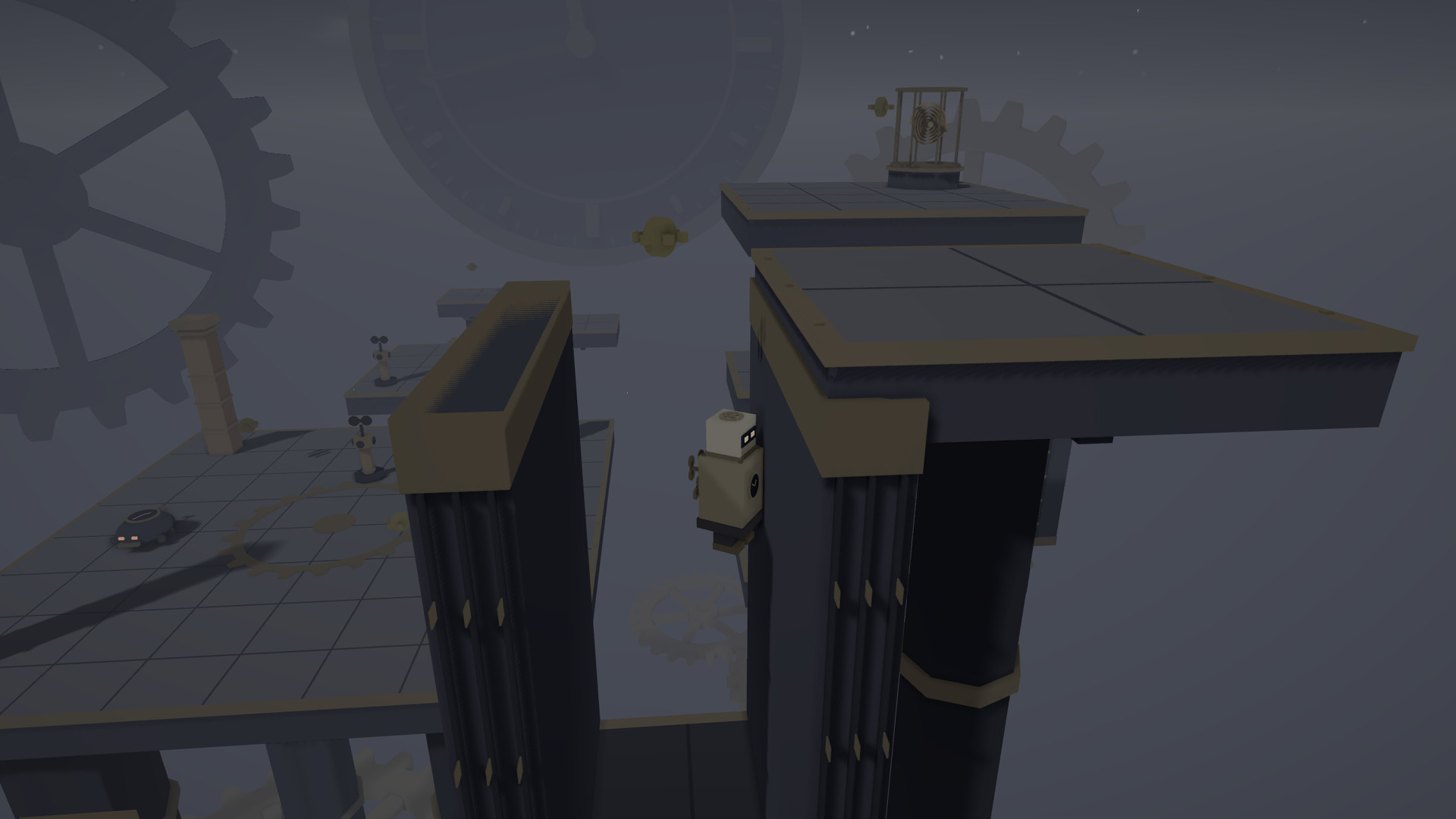
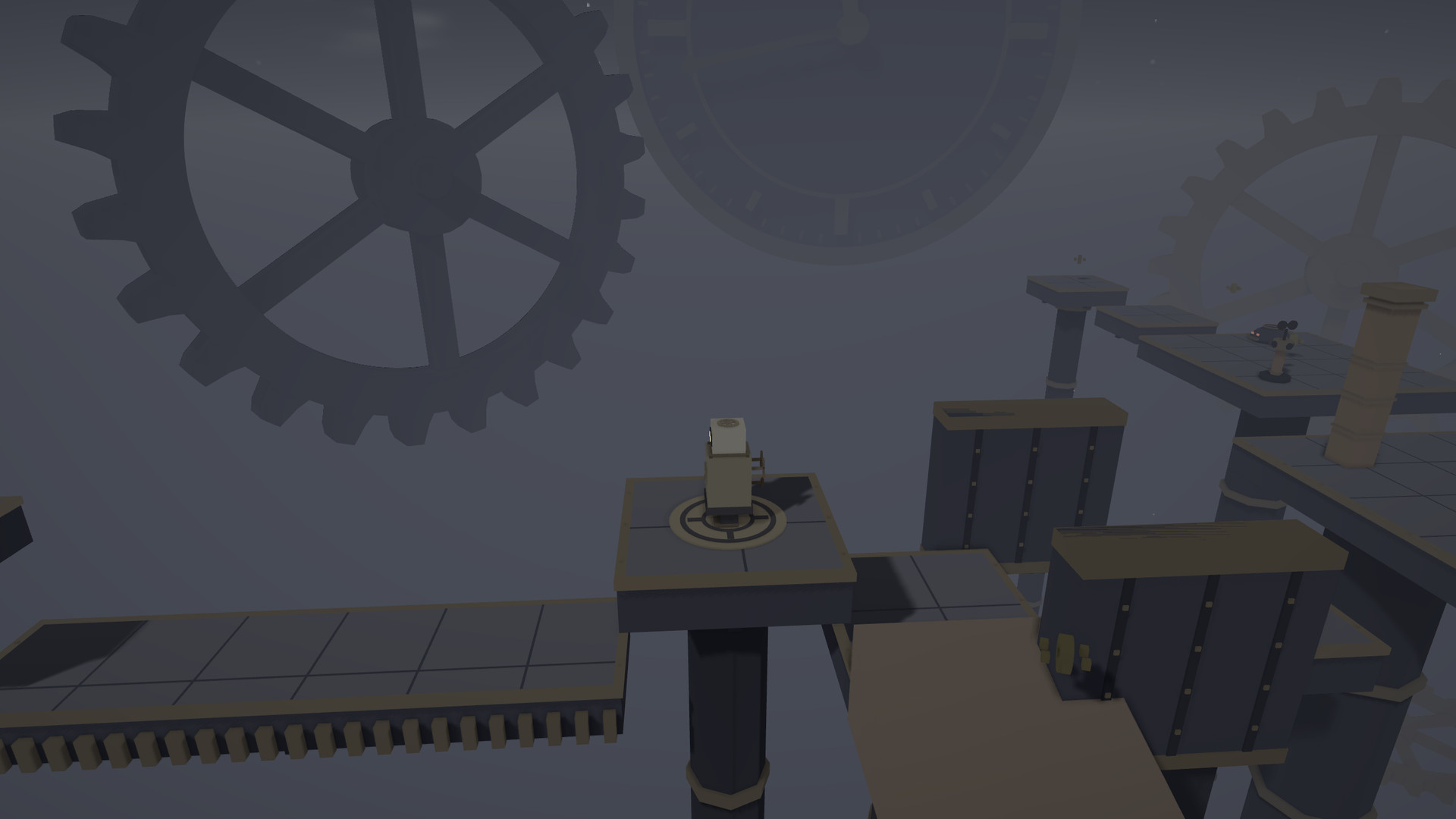
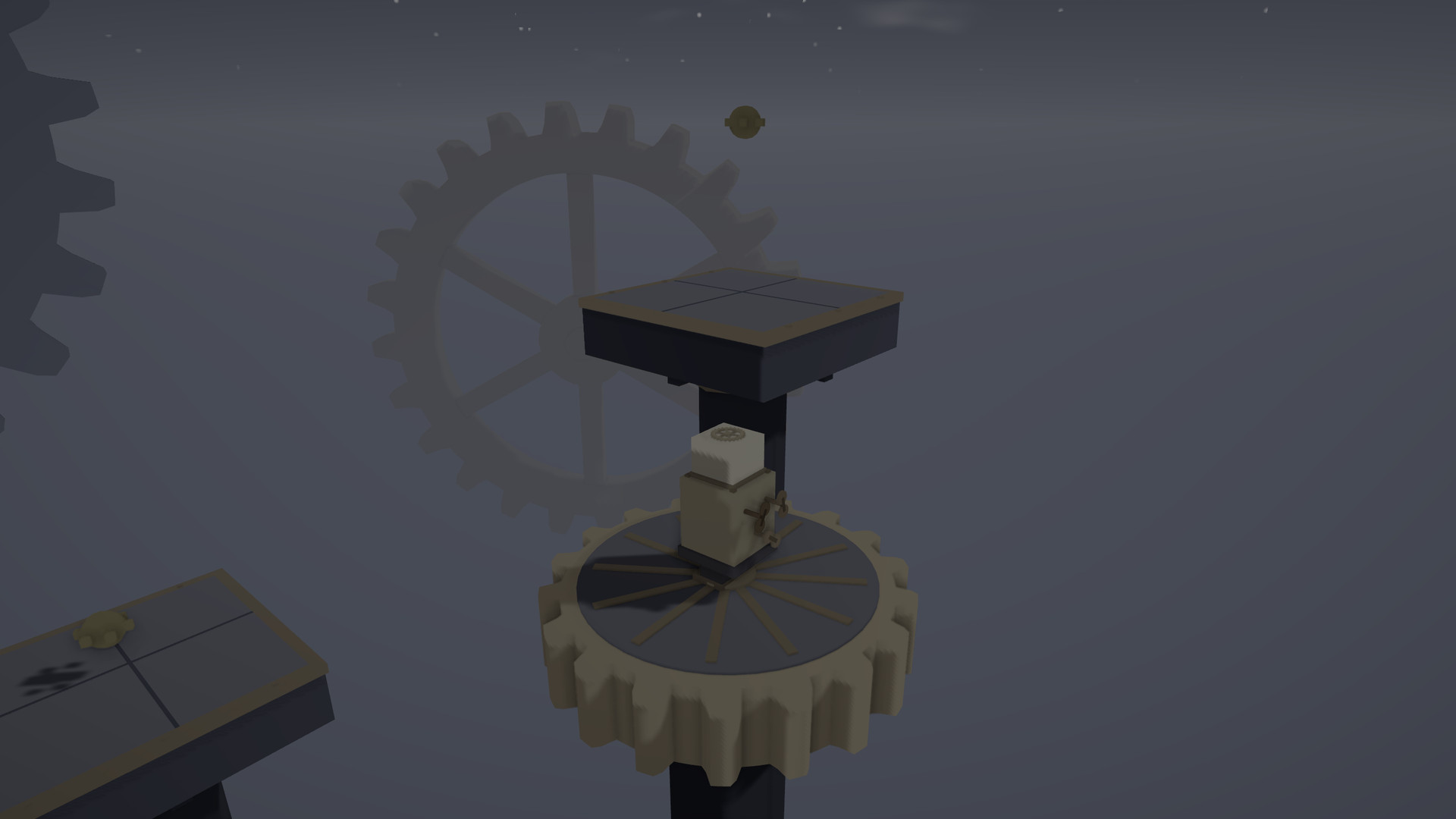
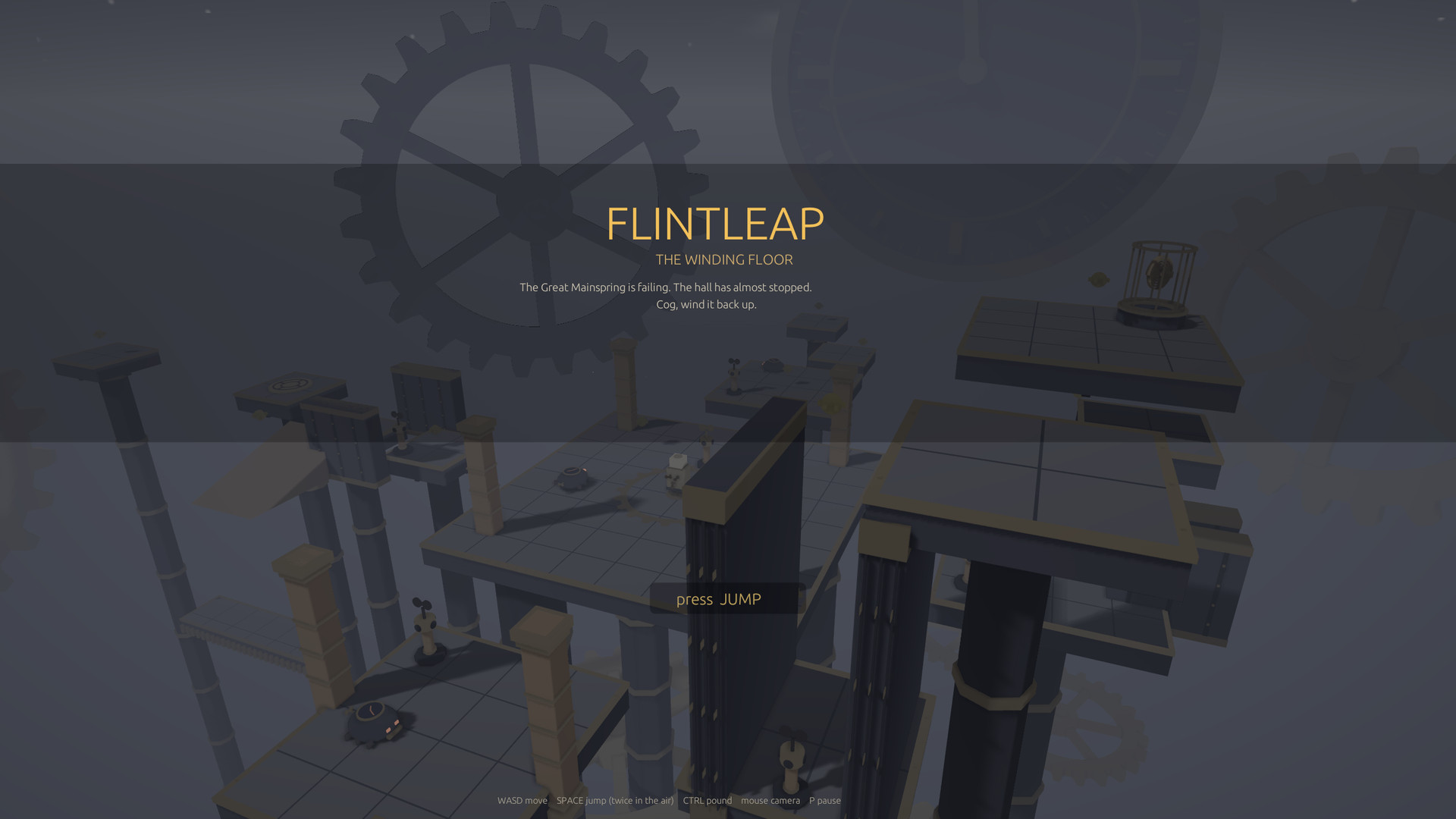
About
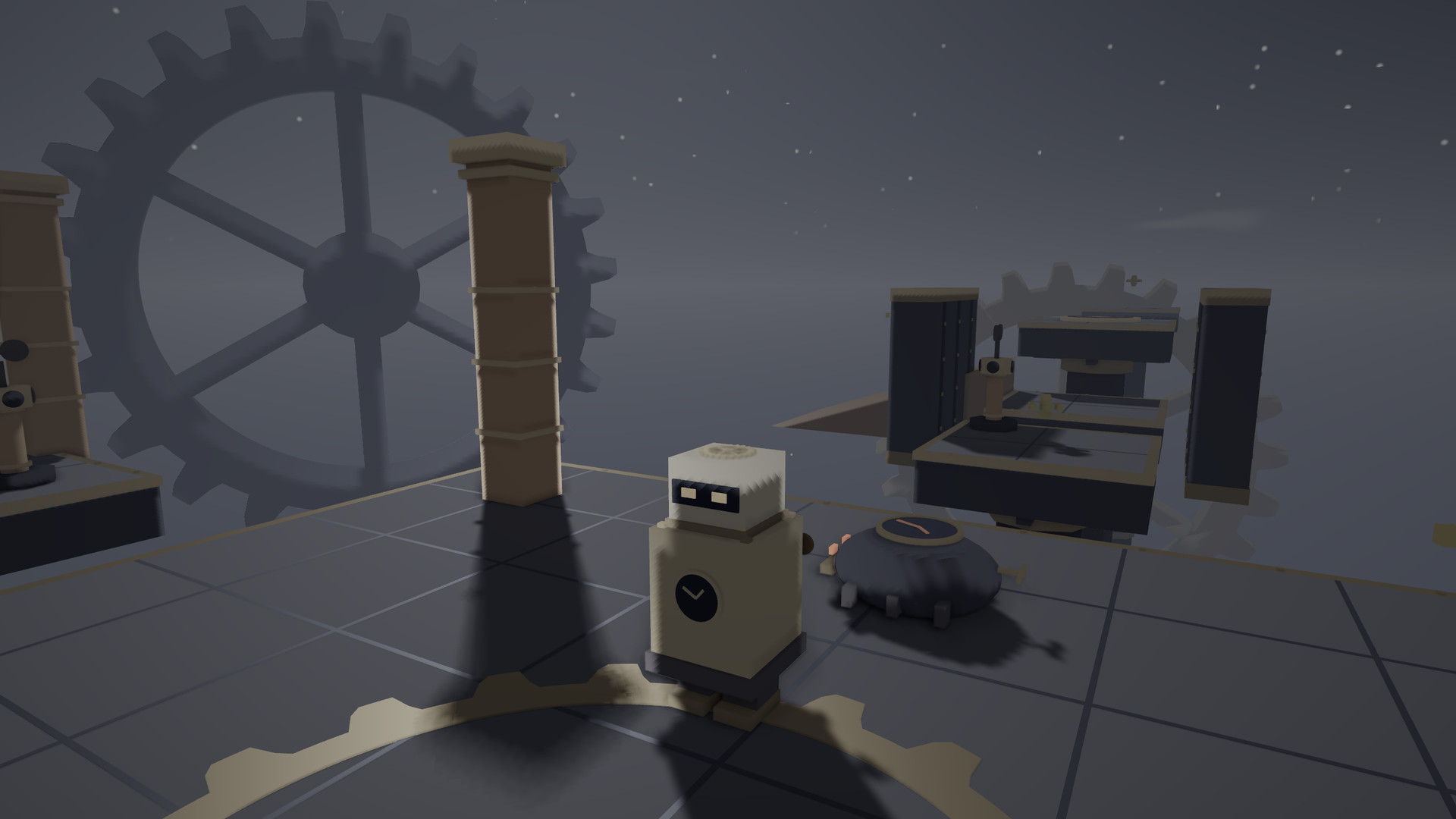
FlintLeap is a 3D platformer starring Cog, a small wind-up automaton. The Great Mainspring is failing and the hall it powers has almost stopped. When the game opens, the world is cold and grey. A thin fog hangs over the abyss, the great gears barely creep, and the room’s clock ticks unevenly, sometimes missing a beat.
The first level, The Winding Floor, is now a complete little game, with a title screen, a run, an ending and a results screen. Sixteen sprockets are scattered across a hub and four wings: stepping stones, a tower, a corridor, a gauntlet, and a chimney you climb by wall-jumping. Twelve of them wake the Mainspring Fragment. Take it, and the Great Clock strikes midnight.
The cover is one frozen instant rendered twice, once wound down and once wound up, and blended through a gear centred on Cog.
The World Winds Up
The sprockets are not just a counter. Each one returned winds the world a little further back up:
- The fog warms from blue-grey to brass, colour returns to the world, and the sun and bloom brighten.
- The great gears in the abyss and on the horizon turn faster.
- The room’s clock steadies from a faltering tick to a calm tick-tock.
- Each sprocket rings the next note up a pentatonic scale, so progress is something you can hear.
- The Great Clock in the northern sky starts at 11:43. Each sprocket springs its minute hand forward one minute, and a distant tock answers the chime.
Playing It
- Moving: run, jump, double jump, and wall-slide and wall-jump up a chimney.
- Ground pound: a short hover, then a slam. It shatters enemies and presses switches.
- Moving platforms: a shuttle to time a hop onto, and a gear deck that turns you as you ride it.
- The void: there is no floor. A missed jump drops Cog into the fog and costs a winding key.
- Health is three keys on Cog’s back. A hit knocks one off in a burst of sparks. Lose all three and Cog winds down, sagging as its eyes gutter out, and is rewound at the last winding post. Touching a post rewinds Cog to three keys.
- Tickers are haywire clock-beetles that hop their patrols in time with their own tick, so you hear them before you see them. Touch one and it costs a key. Stomp it or pound it and it breaks.
How It’s Built
- Everything Cog does lives in script. Velocity, jumps, wall jumps, the pound, damage and respawns are all in Rhai, with collisions resolved by the engine’s shape-sweep.
- Flint calls scripts in no fixed order, so nothing depends on it:
- Moving platforms are pure functions of time, so Cog can work out what it stands on and ride it from any script.
- Events are counters that only ever go up, rather than one-frame flags.
- Models come from a Python generator. Gears, iron decks with brass trim, the Great Clock, Cog, the Tickers and the Fragment are all built from code.
- Sound is synthesized by a second generator from four ideas: bells, ratchets, springs and thumps, placed in one quiet hall reverb.
- Testing: a playtest driver runs the real game in the background, sends it key presses, and records screenshots and video straight from its window. It checks every route through the level for script errors.
These stills and videos were captured from the game itself by that driver. Each moment starts from a staged scene, with Cog placed where the action begins, and is then played with real key presses. Recording runs at a fifth of game speed so every frame is captured, and plays back at true speed.
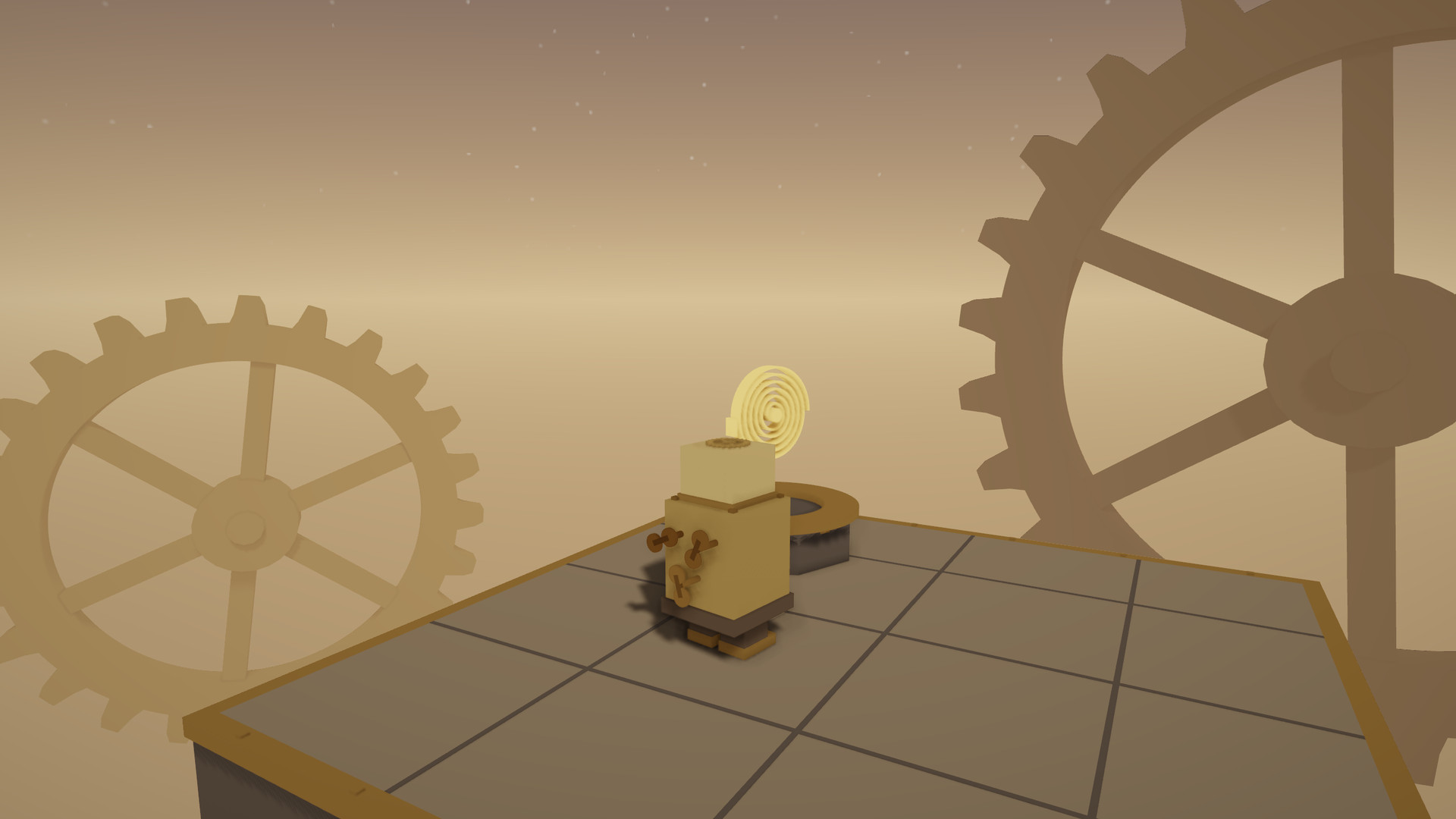
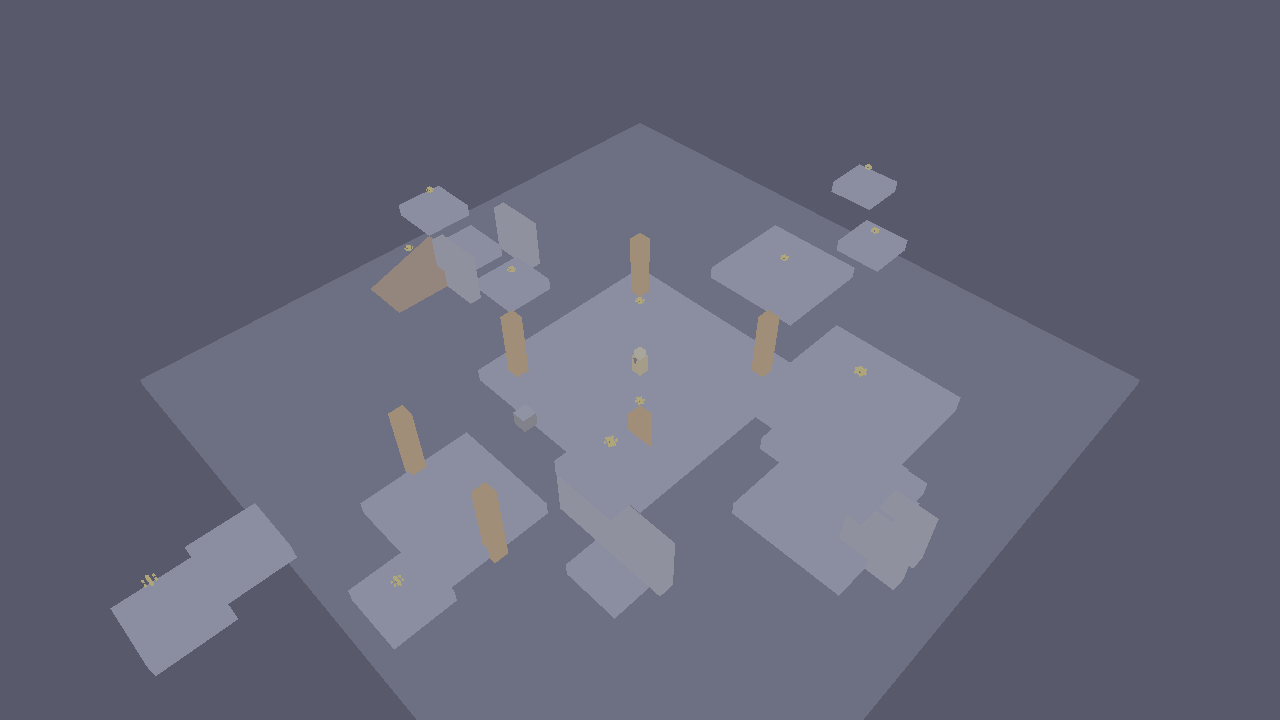
The last screenshot is the level in February: grey boxes and a safety floor.
Technical Details
- Engine: Flint (Rust, wgpu), git subtree
- Game logic: Rhai scripts
- Cog: player controller, camera, animation, HUD and game flow
- The world: world mood, the Great Clock, movers, pressure plates, checkpoints, Tickers and the Fragment
- Content: TOML scenes, prefabs, and game-specific ECS components
- Assets: GLB meshes from a Python generator, with parts merged by material to keep draw calls low
- Audio: Procedural synthesis (NumPy/SciPy), Schroeder reverb
- Rendering: Flint’s procedural sky, fog, bloom, SSAO and colour grading, driven live from script