Flint Kart
An arcade kart racer built on the Flint engine — spline-based tracks with elevation and banking, drift-boost mechanics, AI opponents, and a full race loop from menu to podium.
Screenshots
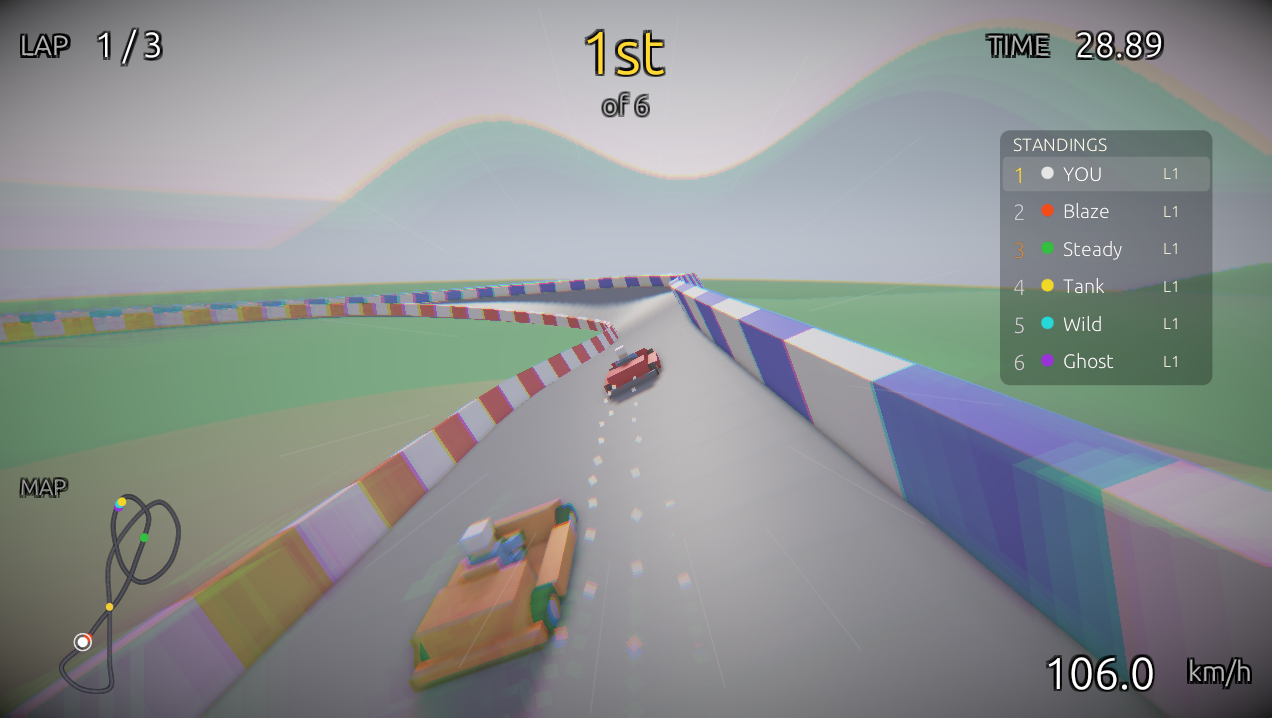
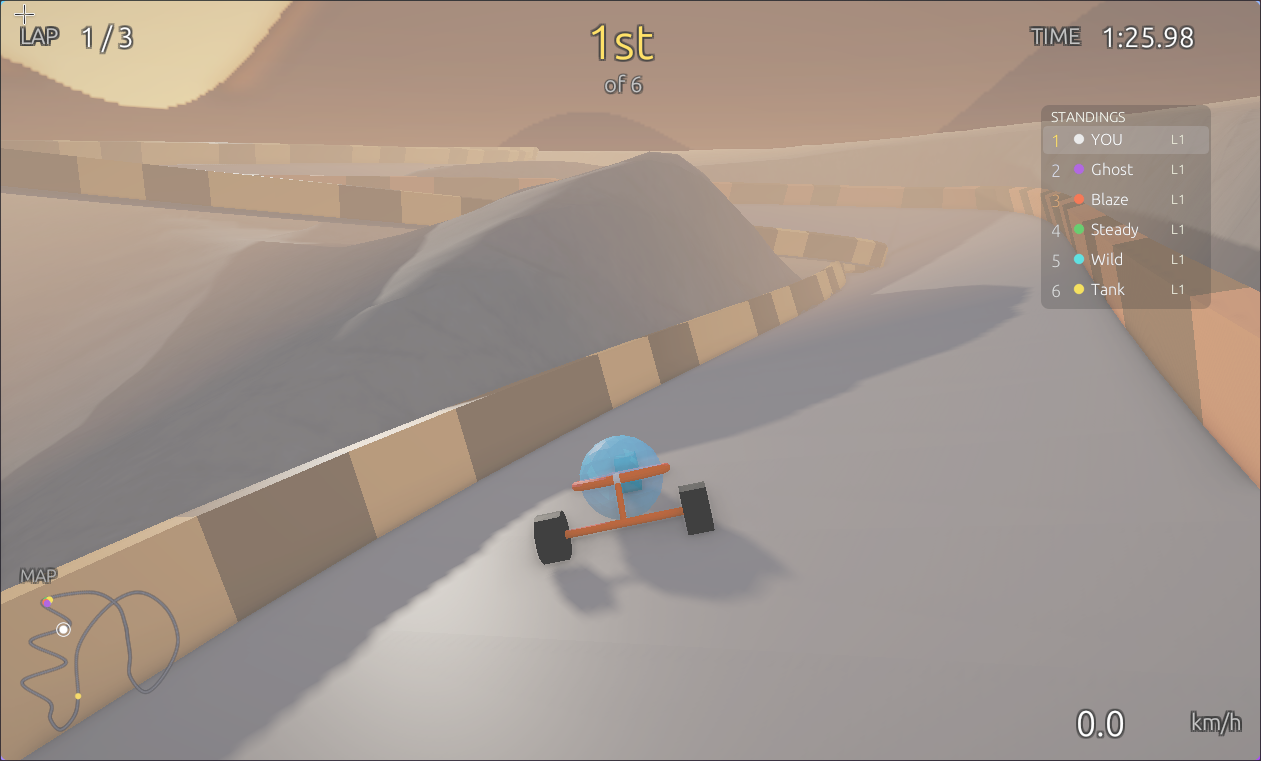
About
Flint Kart is an arcade kart racing game built entirely on the Flint engine. It serves as both a standalone game and a proving ground for the engine’s runtime capabilities — physics, AI, audio, particles, scripting, and UI all working together in a real-time competitive context.
Tracks are defined with spline-based geometry that supports elevation changes, banking, and switchback turns. A 6-kart grid lines up behind a checkered start line, and AI opponents navigate the course using decision trees that adapt to track curvature and race position.
Gameplay
- Drift-Boost System — Hop into a drift, hold through corners, and release for tiered speed boosts (mini, standard, ultra) with escalating spark effects
- AI Racers — Six opponents with intelligent pathfinding and adaptive racing behavior
- Multiple Tracks — Oval Plus for wide-open speed, Mountain Switchback for technical precision, with more planned
- Item System — Collectible item boxes with pickup and use mechanics
- Full Race Loop — Main menu, race countdown, lap tracking, position HUD, and results
Tracks
Oval Plus — A classic circuit with two long straights and sweeping banked curves. Gentle elevation changes reward clean racing lines. Quick laps in the 20–30 second range.
Mountain Switchback — A technical highland course with tight hairpin turns, significant elevation gain, and overlapping road sections visible from above. Rewards precise drift timing and late braking.
Technical Details
- Engine: Flint (custom Rust engine, included as git subtree)
- Physics: Rapier 3D — kart dynamics, collisions, terrain interaction
- Audio: Kira — engine crossfade by speed, tire sounds, race music
- Track Geometry: Spline-defined with procedural road mesh, barriers, and checkered markers
- UI: Data-driven TOML menu system with scene transitions
- Rendering: wgpu PBR with shadows, particles, skyboxes, fog
- Input: Keyboard and gamepad support via configurable action bindings