Living scene · Released · October 2026
Fishbowl
An ambient planted aquarium that lives through a ten-minute day and night: 3D-spined fish with names and temperaments, light that pours through moving water, and a tank that remembers you.
Clips
Feeding time
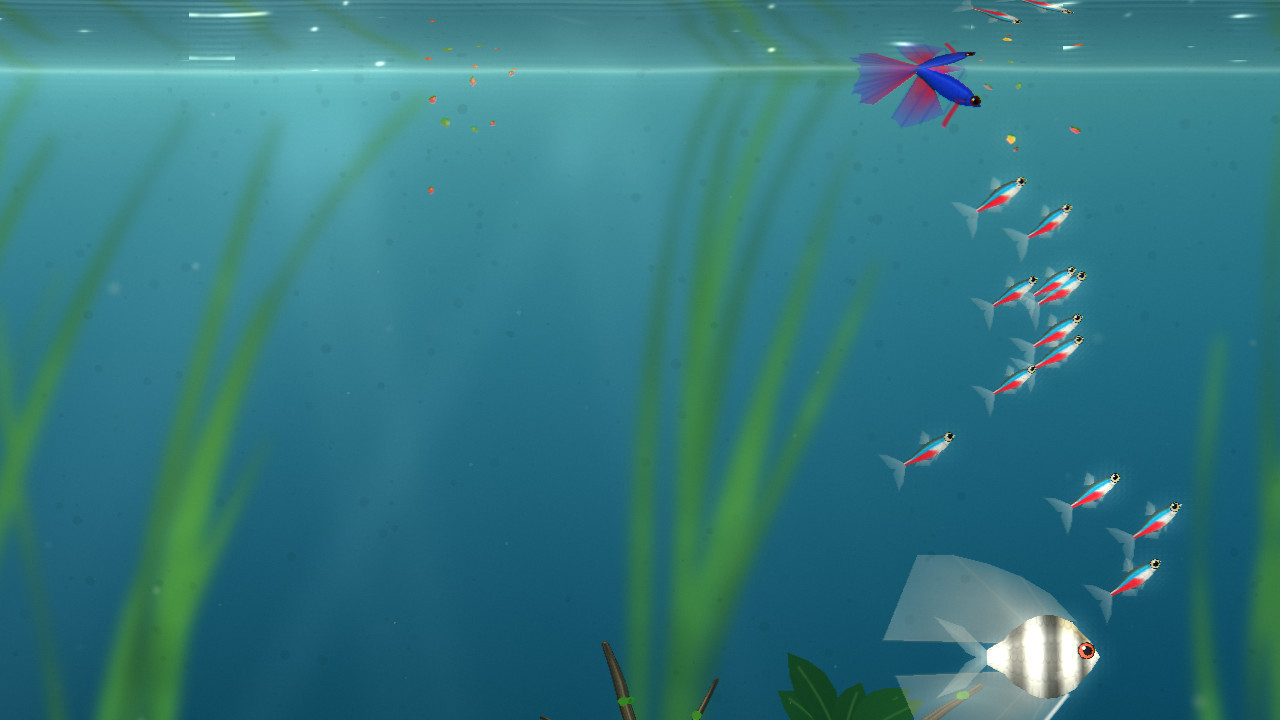
Two pinches of flakes. Each lands with a plip and a ripple, then drifts on the current. The betta rises to take them at the surface, the tetras break formation, and the corydoras wait below for what falls.
Meet the fish
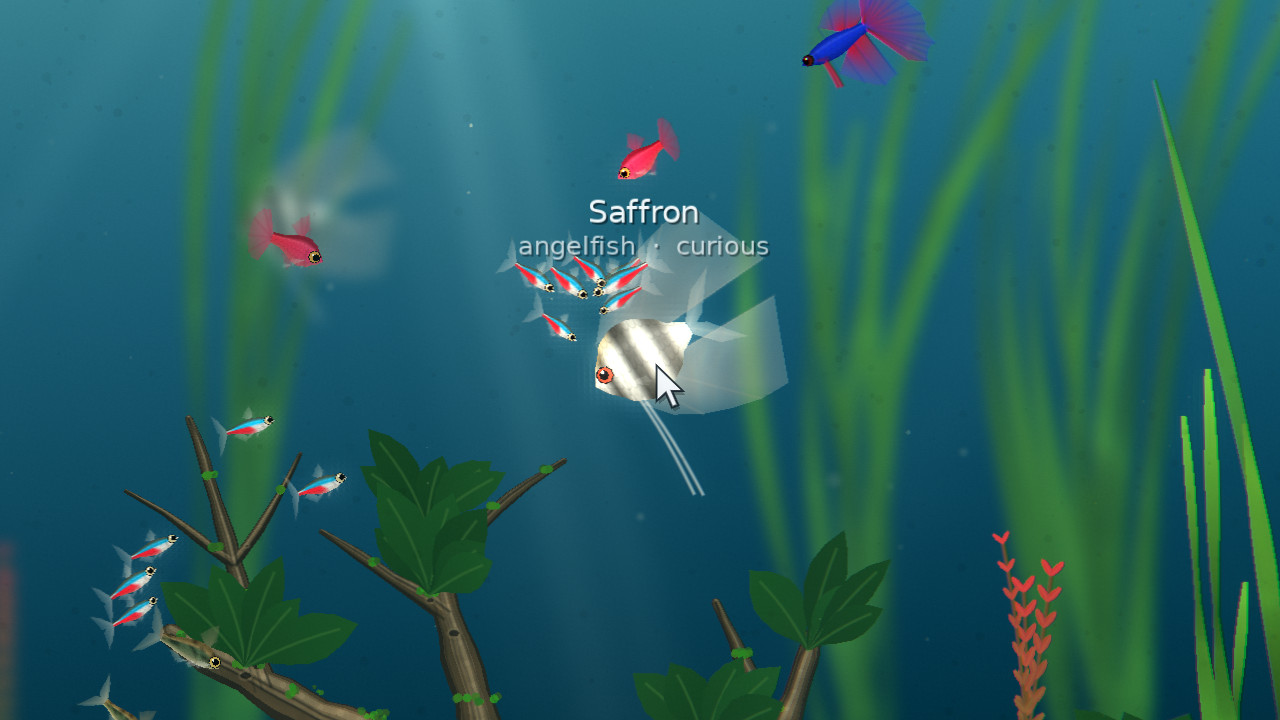
Rest the cursor and curious fish come to the glass. The one beneath it tells you its name, its species and its mood. A right-click taps the glass: a ripple runs across it, and the fish nearby flinch away with a C-start.
Screenshots
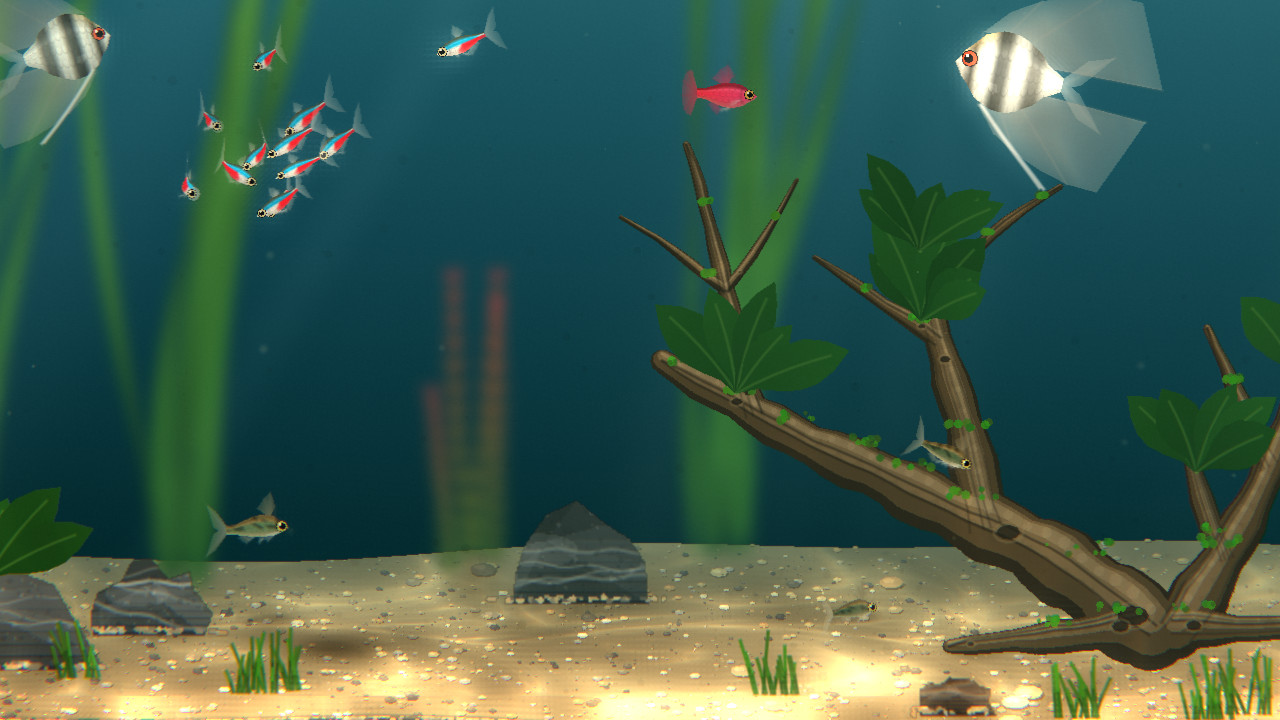
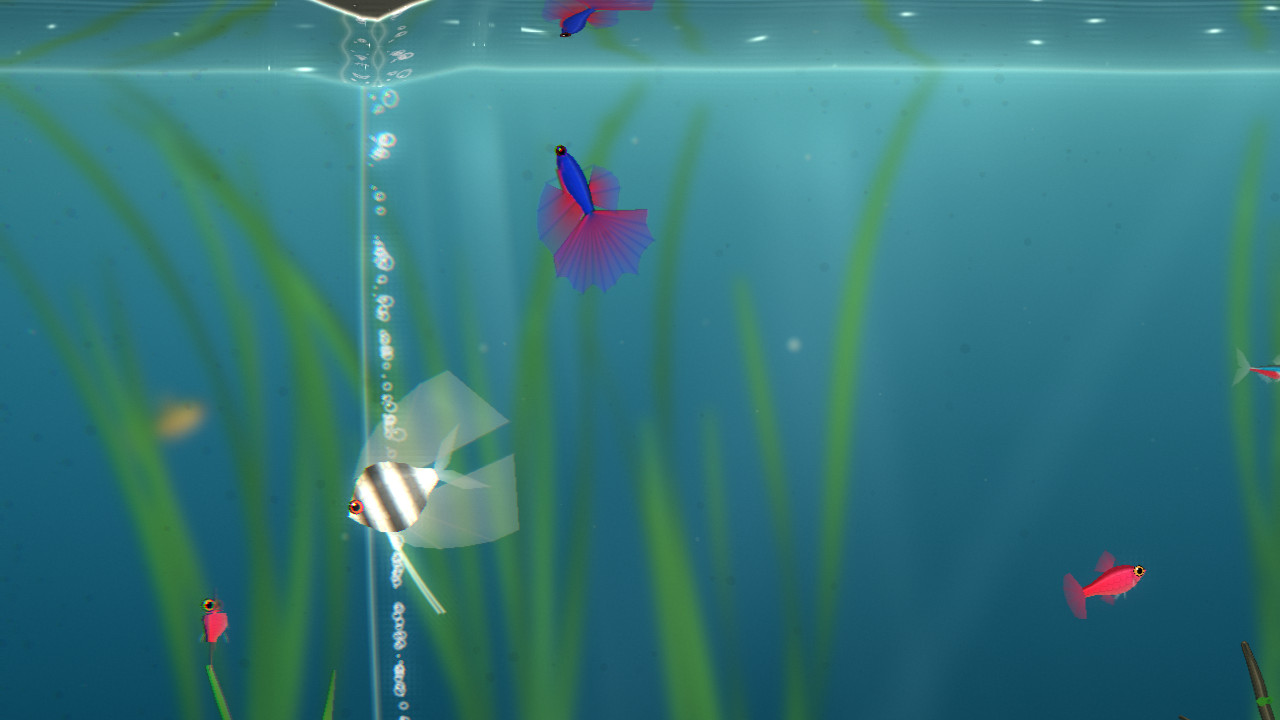
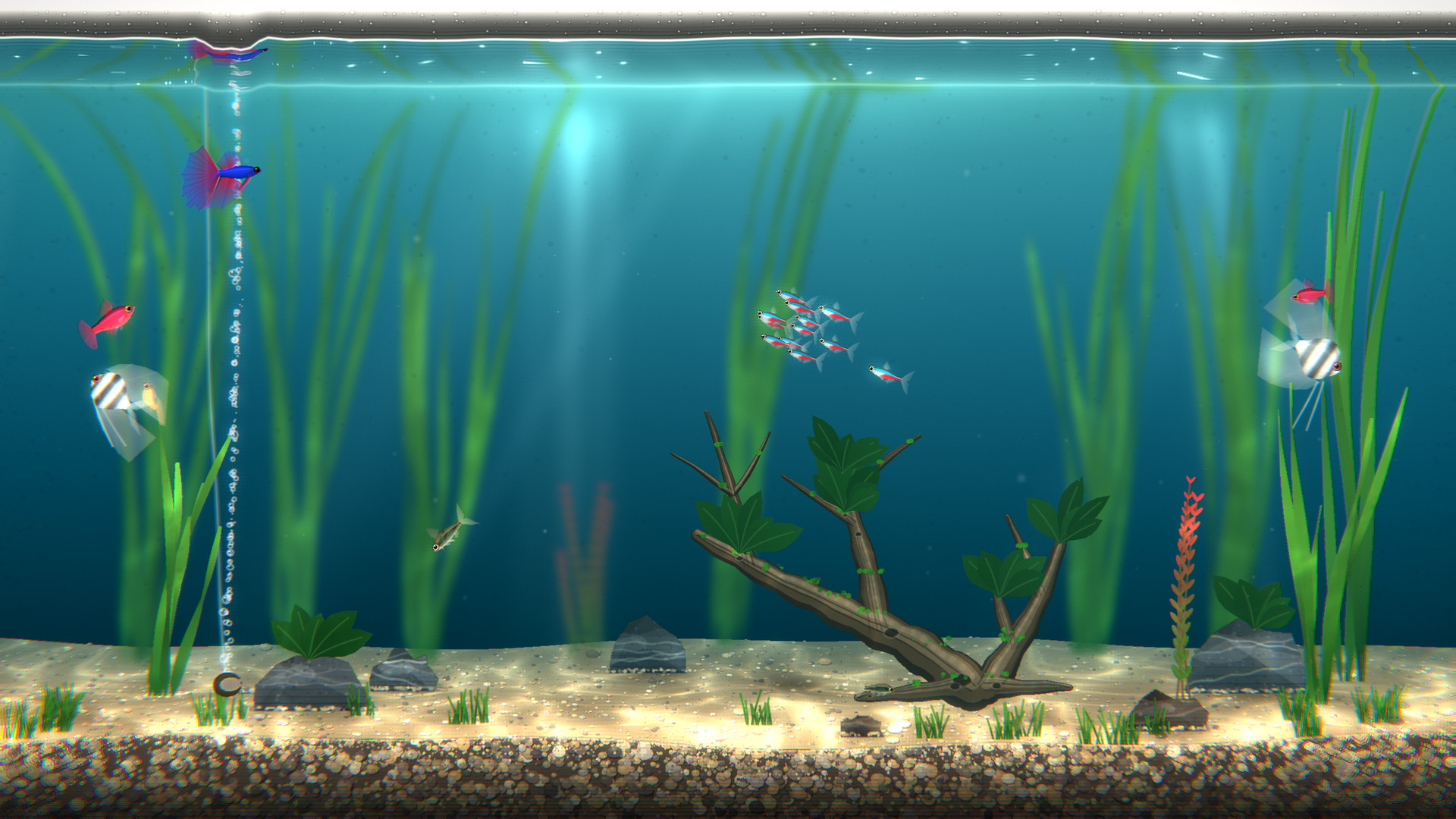
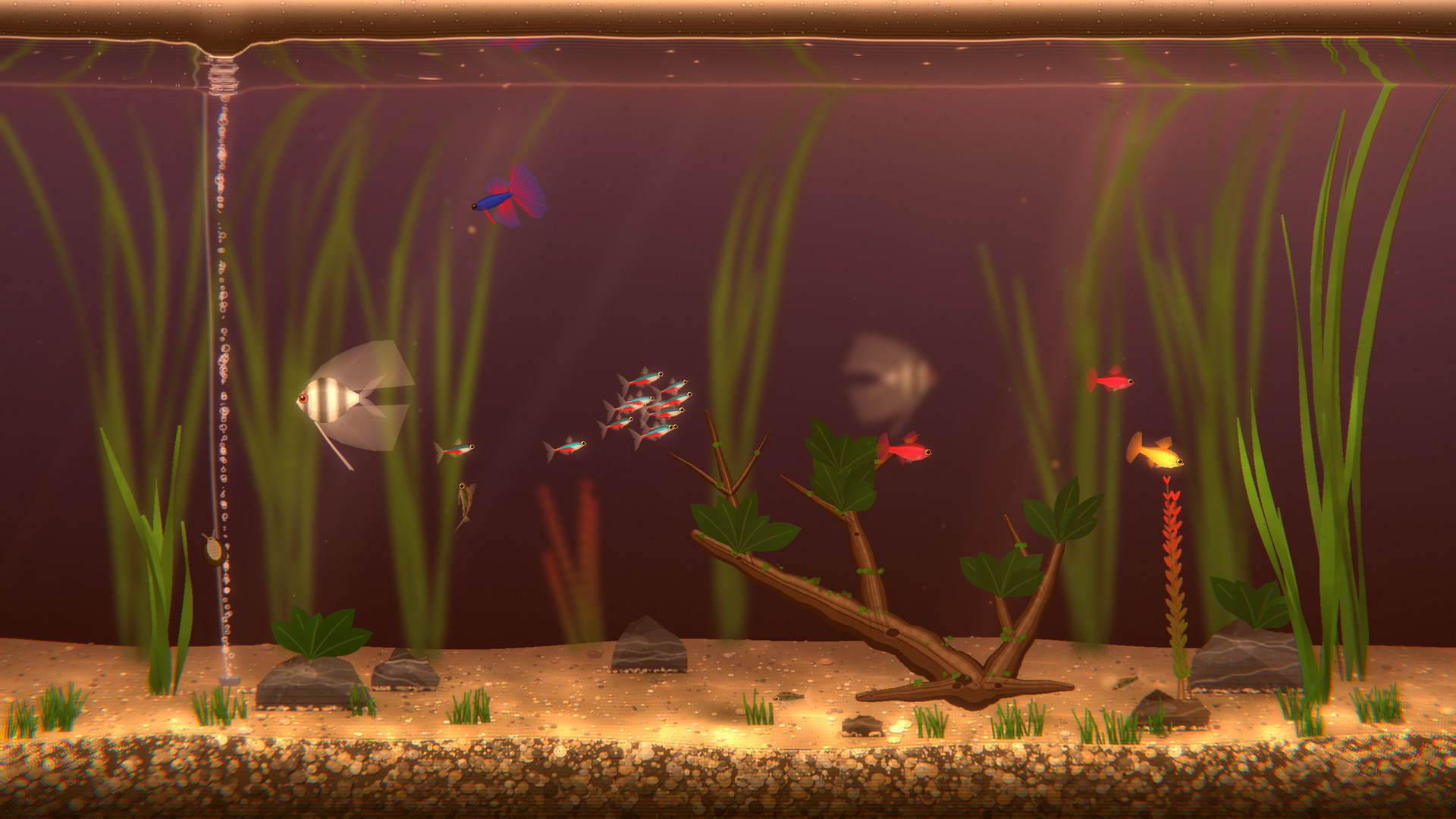
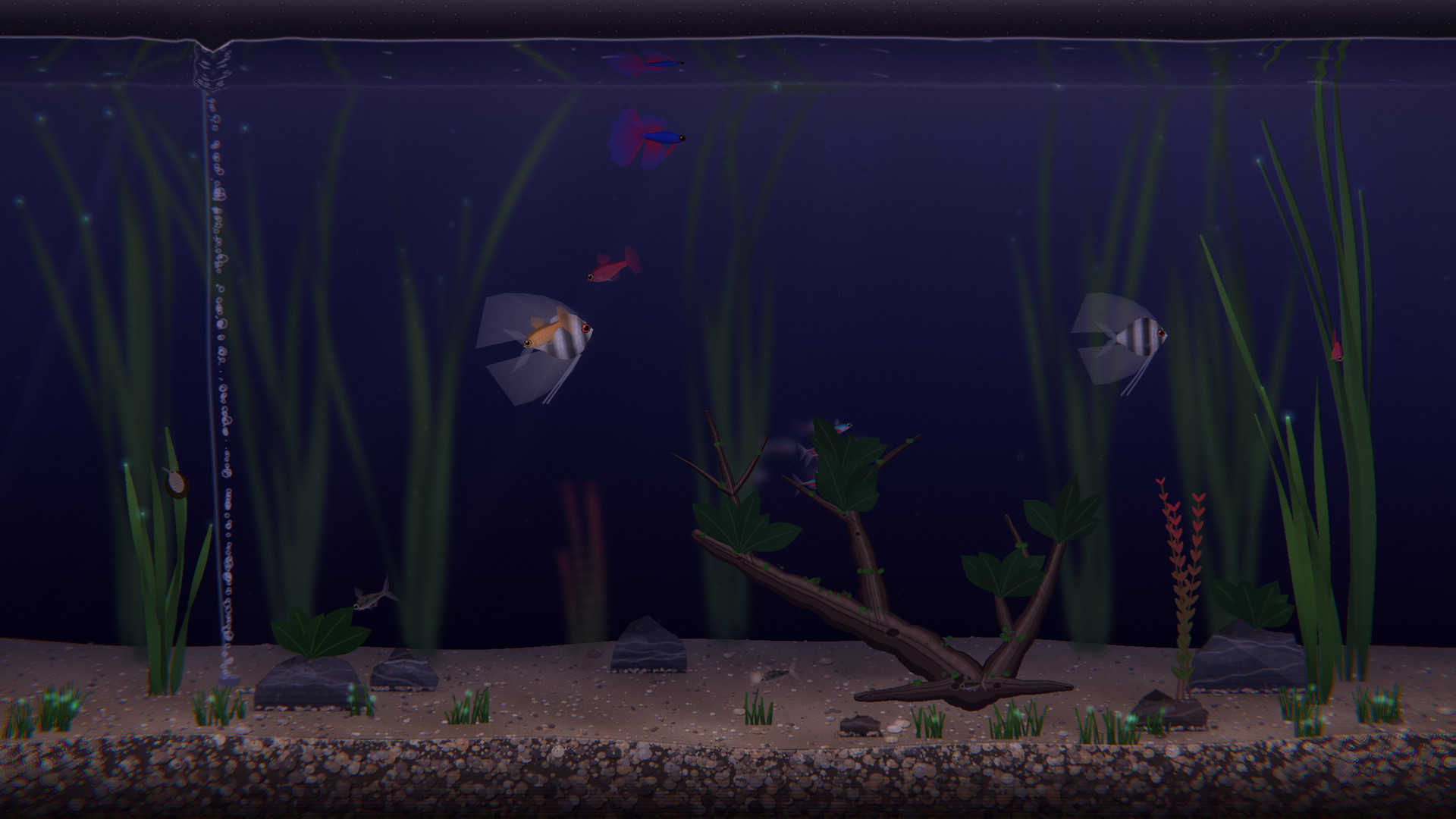
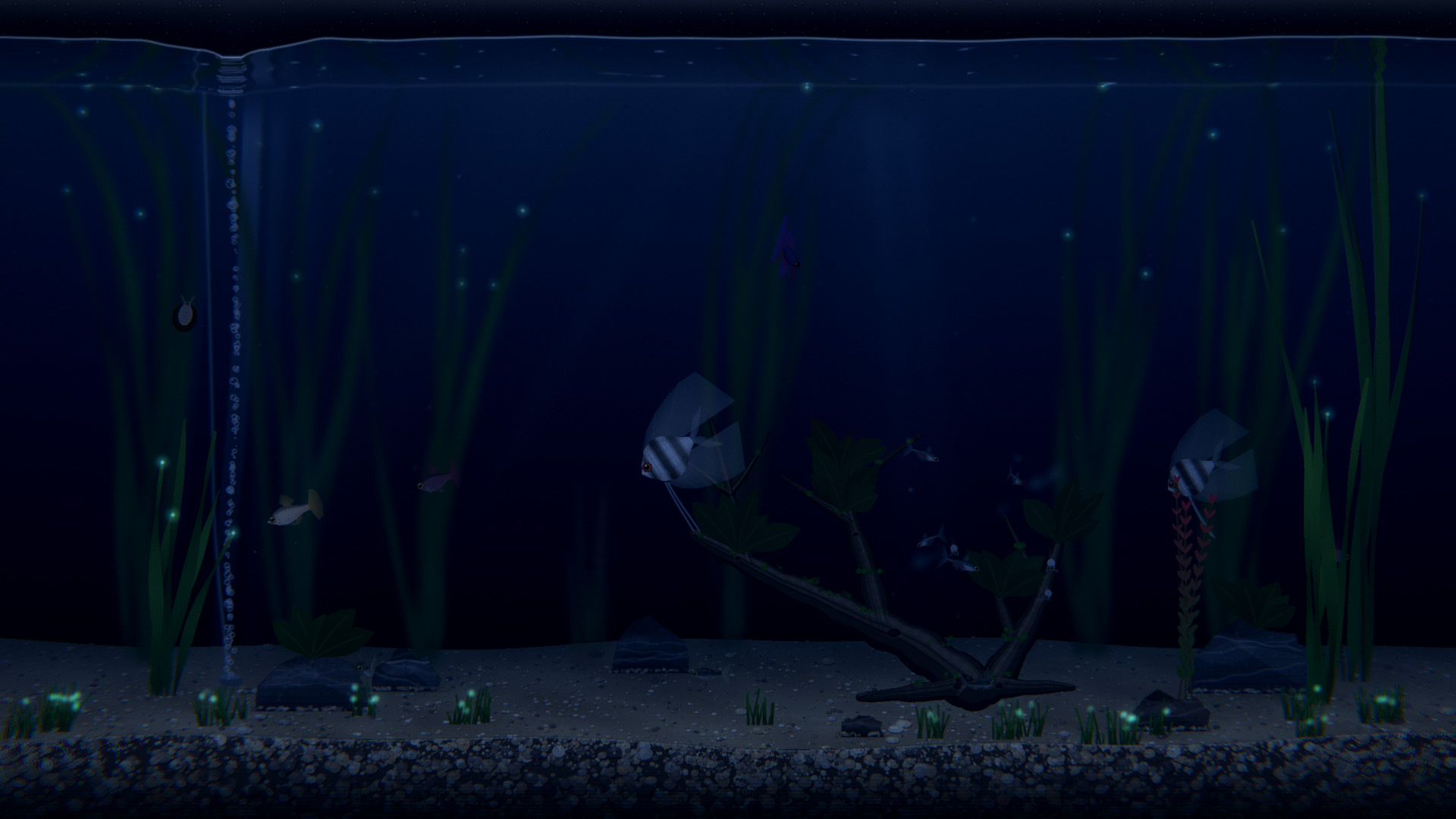
About
Fishbowl is a planted aquarium you look into, not a game you play. It is a tank seen through its front glass, slowly living through a day: a grey dawn, bright morning light pouring through the surface, a warm sunset, dusk, and then the blue of a moonlight LED while the fish sleep. A full day takes ten minutes, or you can let it follow the clock on your wall.
You can sprinkle food, tap the glass, or rest the cursor and let the curious ones come to say hello. Every fish has a name and a temperament. The tank remembers them, and how much they have come to trust you, so the fish that learned your cursor still come to the glass when you return.
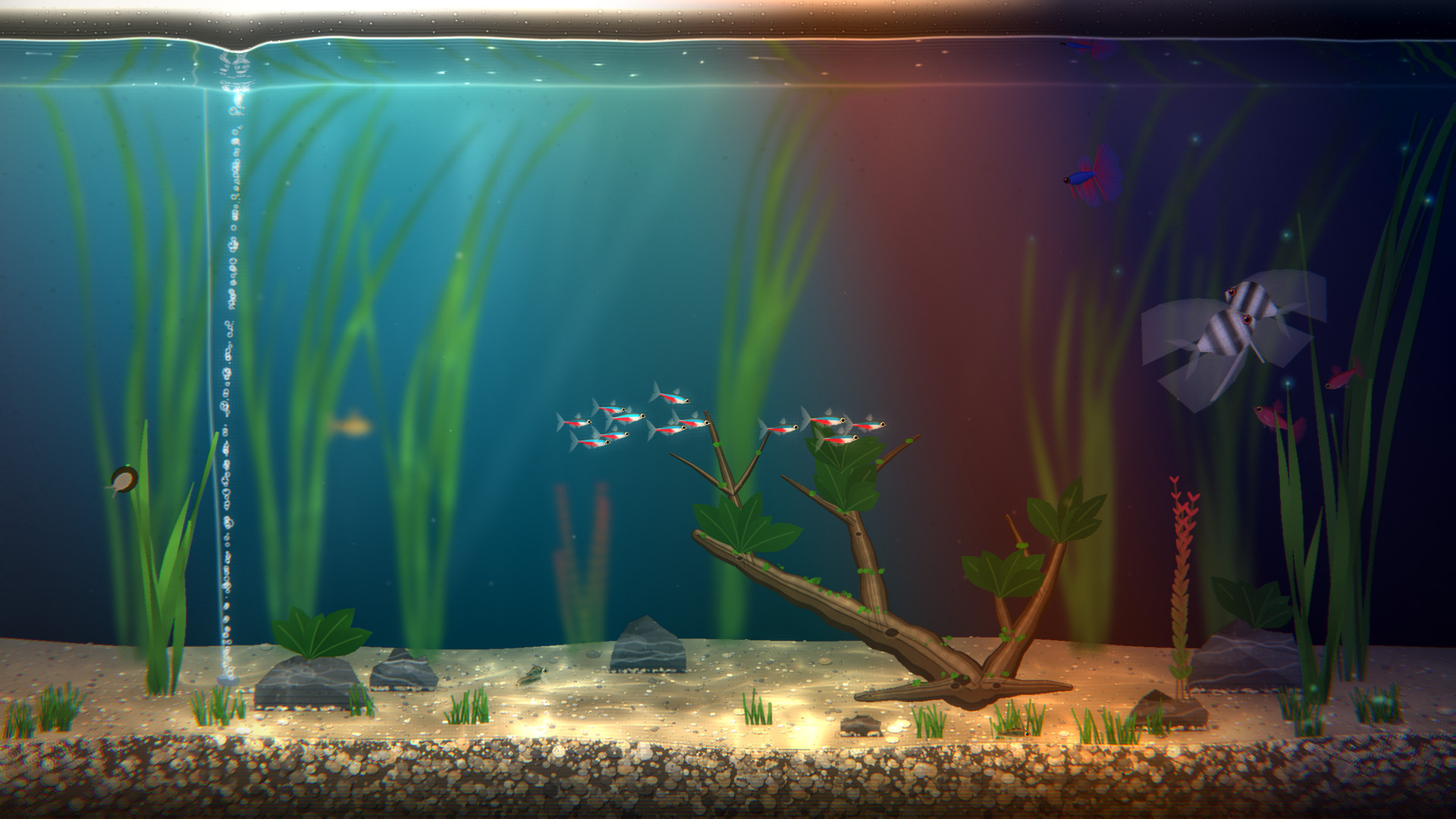
The cover is a single frozen instant, rendered seven times, once for each time of day, then blended across the glass. Dawn starts at the lower left, the day rises through the middle, and night settles in at the upper right, where the plant tips glow. The same fish, the same ripple, and the same bubble appear in every rendering; only the light changes. That is the project in one picture: one tank, one moment, a whole day.
The Windows download needs no installing: unzip it and double-click Fishbowl.exe. The build isn’t signed, so Windows may warn you first. Choose “More info”, then “Run anyway”.
Life in the Tank
Twenty-one fish of five species, each with its own way of moving:
- Neon tetras (twelve) school together as boids, matching speed and heading with their neighbors.
- Angelfish (two) glide slowly and turn with their tall fins catching the light.
- Bronze corydoras (three) forage on the bottom, puffing up little clouds of sand as they sift it.
- A betta drifts near the top and rises now and then to gulp air at the surface.
- Sunset platies (three) are the only fish that keep the colors of the original Fishbowl.
Each fish has hunger, curiosity, boldness and trust, and moves between moods: wandering, schooling, foraging, curious, wary, startled, asleep. Fish grow pale at night and settle low in the tank to sleep, but a hungry one will still wake for food that falls close by.
The tank itself is alive too:
- Vallisneria ribbons bend in the current and float along the surface.
- Java fern grows on the driftwood.
- In strong light the plants release tiny oxygen pearls.
- An air stone drives a current that the bubbles, flakes, plants and drifting motes all follow.
- A nerite snail grazes a real film of algae from the front glass.
Light and Water
The light does most of the storytelling. Each time of day is a keyframe of about fifteen values: water color at the surface and the floor, haze, light color and angle, caustic strength, how vivid the fish are, and a matching color grade and bloom. The keyframes ease smoothly into one another. The original Fishbowl palette of coral, amber and mauve is still here as the sunset.
- God rays follow a moving 1D height field on the surface, so the shafts sway with the ripples above them.
- Caustics dance over the fish and plants and, separately, across the sand in world space, so they recede into the tank with correct perspective.
- Absorption turns the water deeper and bluer toward the floor, and haze softens everything near the back glass. The far layer is drawn with a shallow depth of field.
- The surface is seen from below as a band of rippling light at the top of the tank, with the hood light glinting through it.
Things to Do
- Click: sprinkle food
- Right-click: tap the glass
- Rest the cursor: meet a fish
- T: skip ahead to the next time of day
- [ and ]: slow down or speed up the day
- R: follow your real clock
- M: mute
- F12: save a picture
- H: show the help card
The sound is synthesized when the app starts, and no audio files ship with it. You hear the hum of the air pump, the trickle of the bubble column, pops at the surface, the plip of food landing, and a soft thud when you tap the glass.
How It’s Built
Everything follows from one small decision: the tank is a shallow 3D box. Every object has a world position plus a depth, from the back glass to the front, and is projected toward a vanishing point. From that one choice, the rest follows: painter-sorted drawing, the sand bed rising toward the back, perspective-correct floor caustics, and fish that turn in three dimensions.
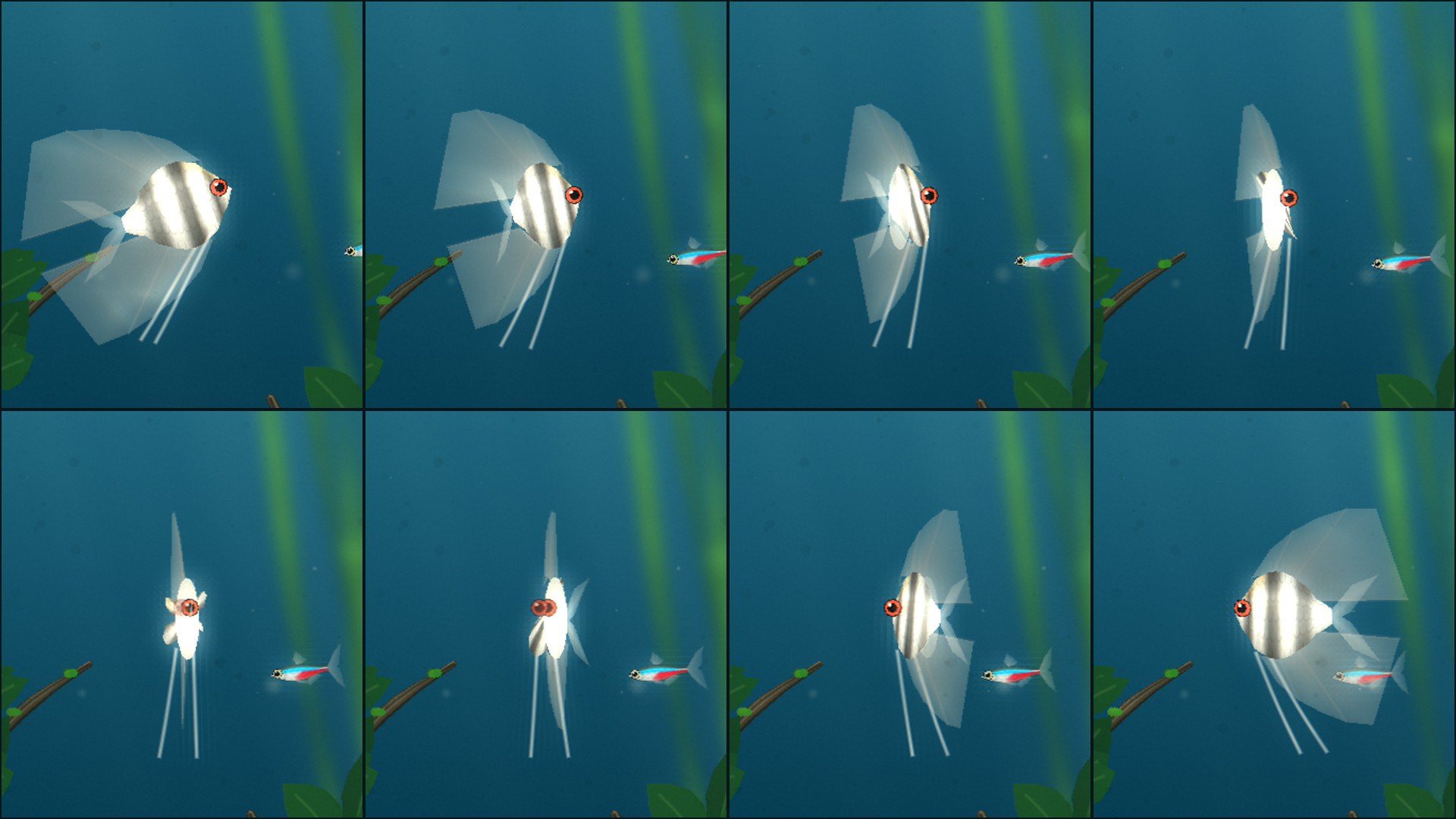
Each fish is a spine, a traveling wave along a chain of points with real yaw and pitch, skinned as a vertex-colored mesh with gradient fan-mesh fins. When a fish turns toward the glass it foreshortens, all the way to head-on, and opens out again on the other side. The filmstrip in the gallery shows an angelfish doing exactly that, one frame every tenth of a second.
How These Were Made
Every image and clip on this page was rendered by the app itself. A small capture script, run through Fishbowl’s developer --script mode, locks the clock to exact 1/60 s steps and gives every canvas twice the pixel density. The tank renders at 2560×1440 while its world stays 1280×720, and the frames are piped straight into ffmpeg. The cursor in the clips is a virtual mouse that the script steers, and the fish react to it just as they would to yours. Every frame shows exactly what the tank drew. The only edits are crops, fades, and the one-second crossfade that makes the day loop.
Technical Details
- Language: Lua on LÖVE 11, with GLSL shaders
- Rendering: rgba16f scene canvas, half-resolution caustics and depth-of-field passes, a shared object-lighting shader, and a composite pass for the surface, glass tap and grain
- Post-processing: bloom, gentle distortion and a color grade, all driven by the time of day
- Simulation: boids schooling, per-fish state machines, a current field, and plant chains with buoyancy and bending stiffness
- Audio: procedural SoundData with seamless crossfaded loops
- Persistence: names, trust and colors are saved between visits
- Dev modes:
--snap,--selftest,--seedand--scriptcheck the tank without anyone at the mouse - Libraries: LoveLibs as a git subtree (post-processing, scaling, debug overlay, music)