Game · In development · October 2026
Character
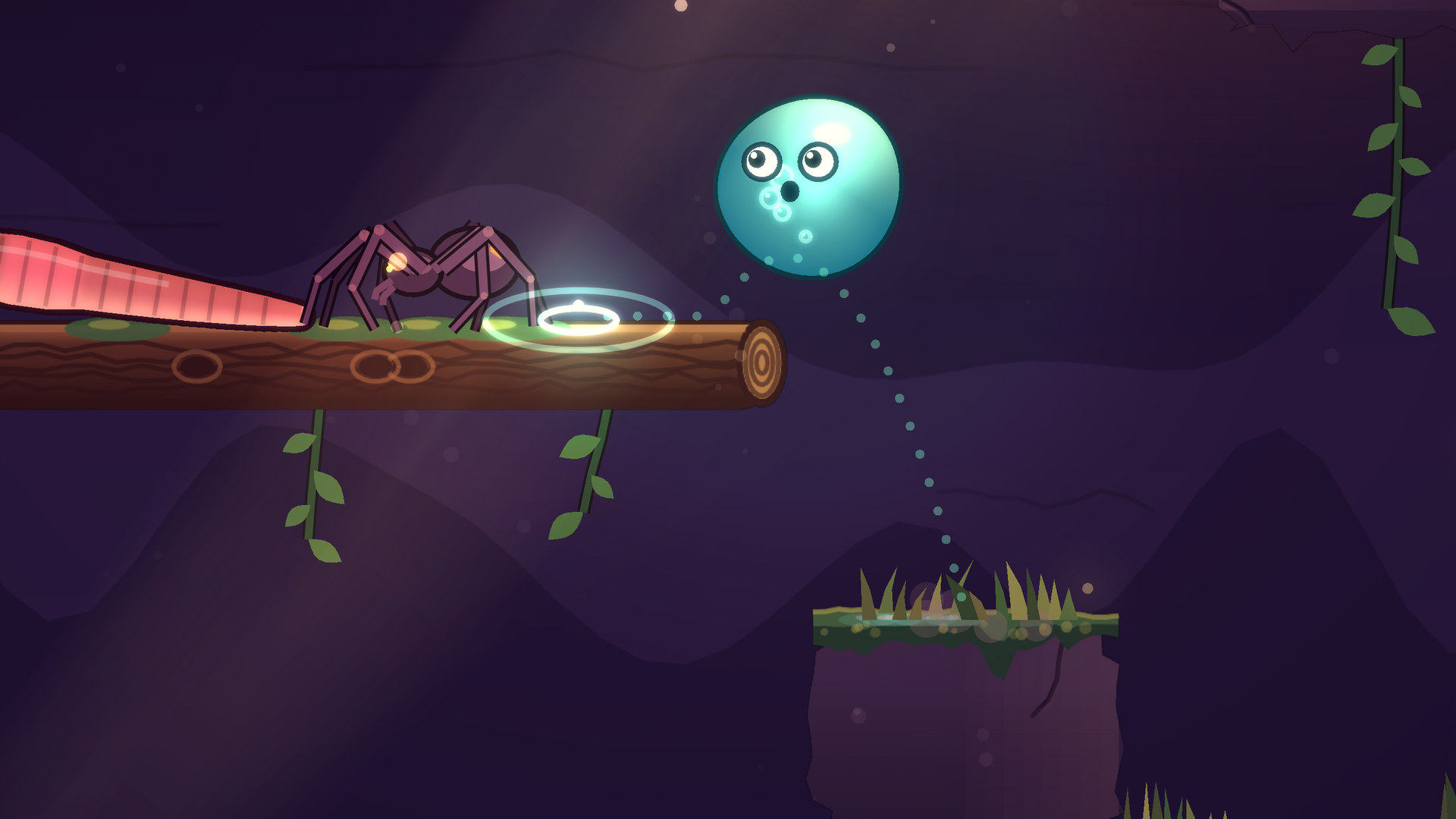
Three procedural creatures share an overgrown cave at dusk: a verlet earthworm that crawls, a pressure-soft jelly blob, and a FABRIK spider that walks on walls and ceilings. Every jump they make is planned by physics before it is flown.
Clips
Anywhere it can stand
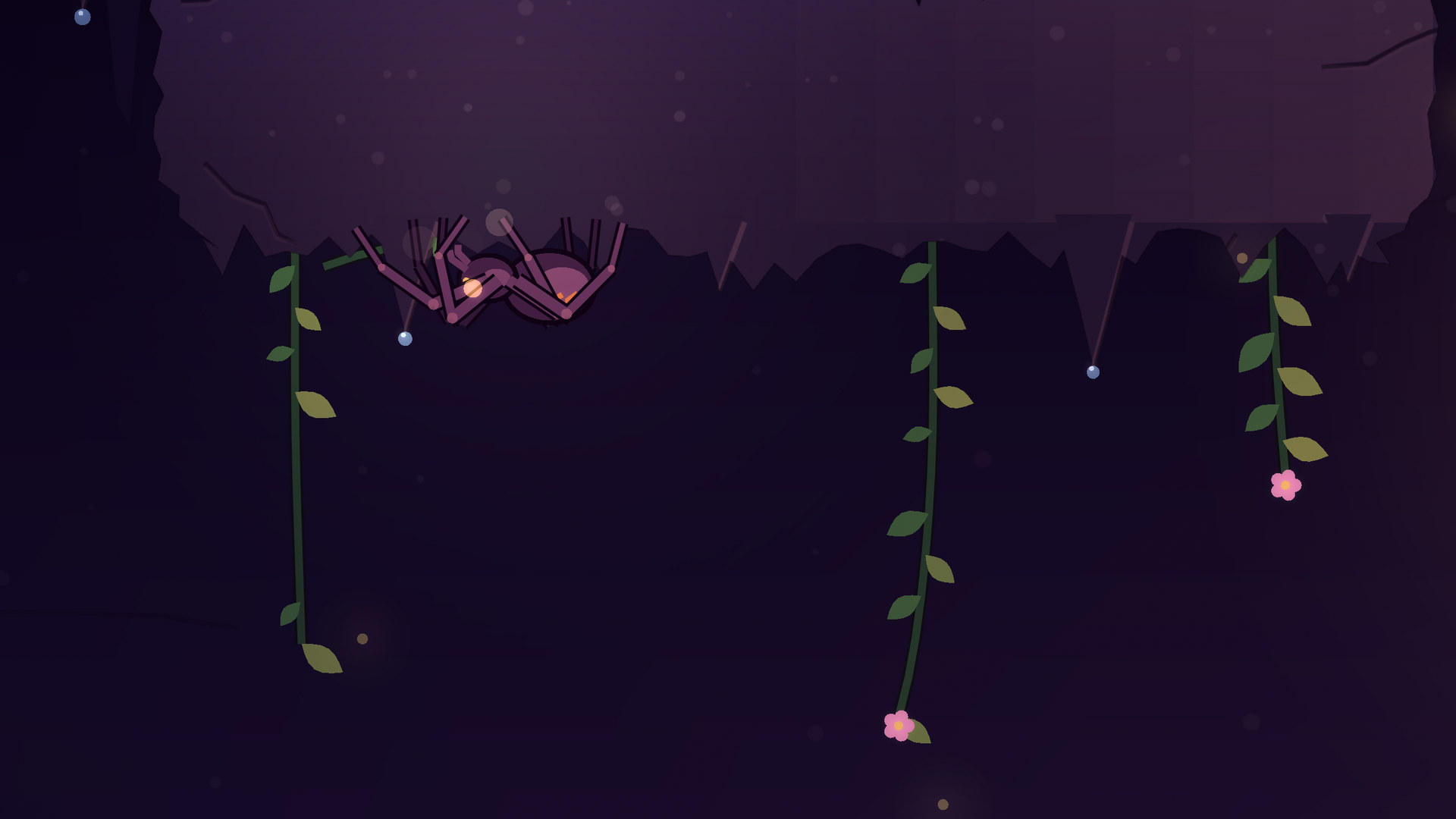
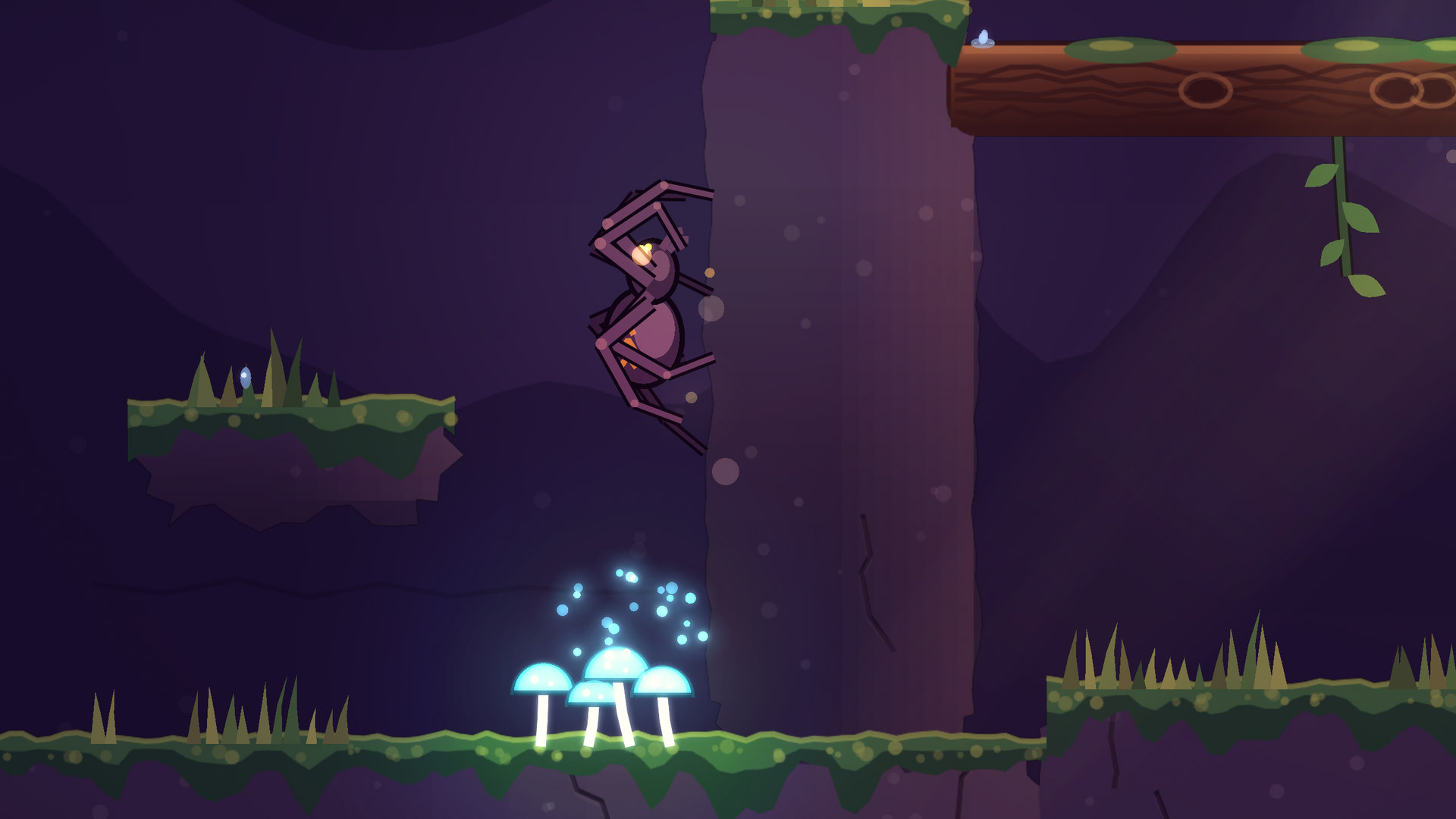
The spider's navigation graph wraps every exposed surface, corners and all. It crawls up the cave wall and walks the ceiling upside down to the overhang. Each of its eight legs finds its own foothold with a raycast and lifts when it falls behind, four at a time.
Every jump is planned
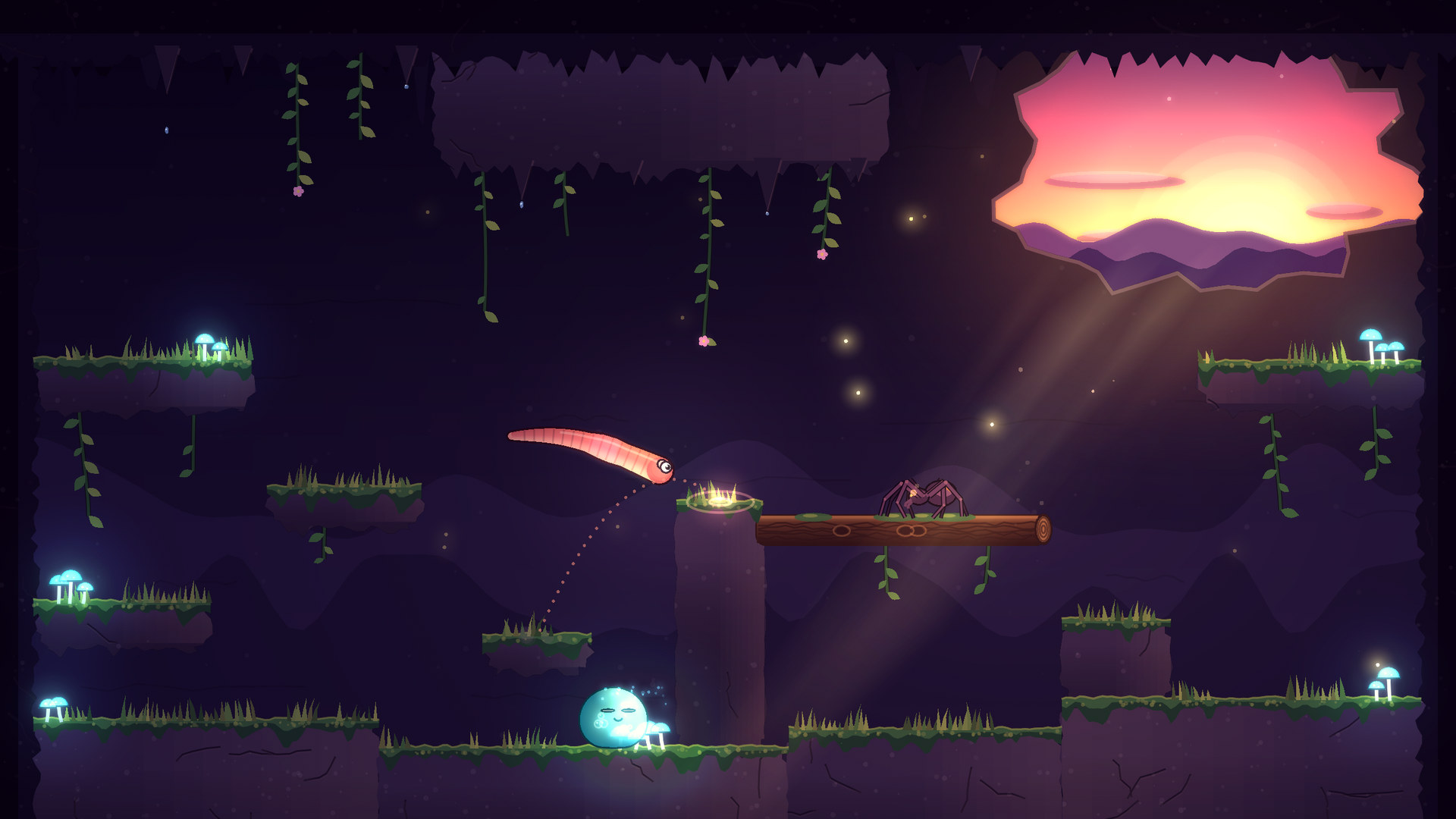
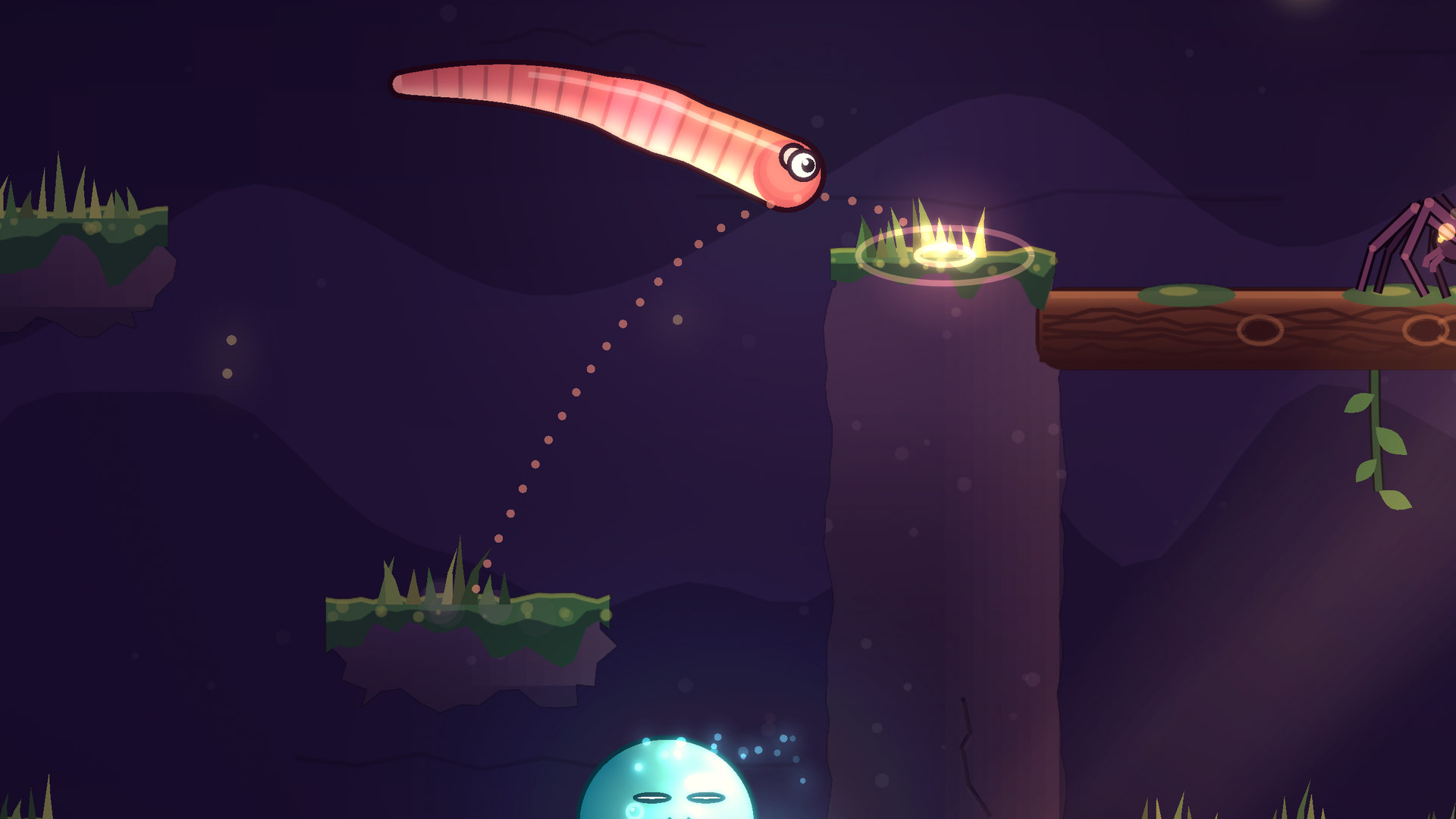
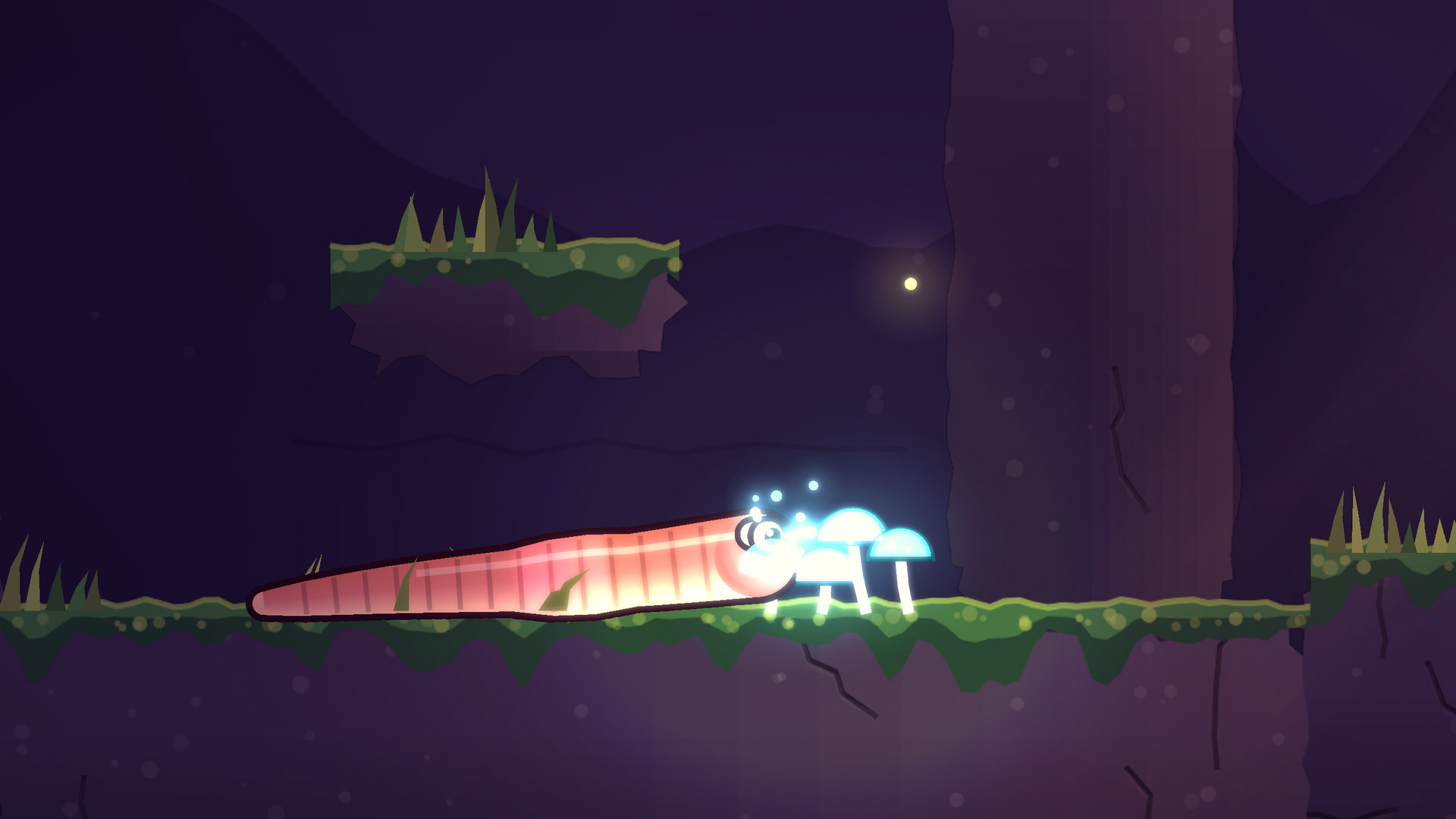
The worm climbs the mossy staircase. The dotted arcs are its plan, solved before takeoff by the same ballistics it then flies. Its head rides an exact anchor while the verlet body coils, trails through the air and drapes over the ledge when it lands.
Under the skin
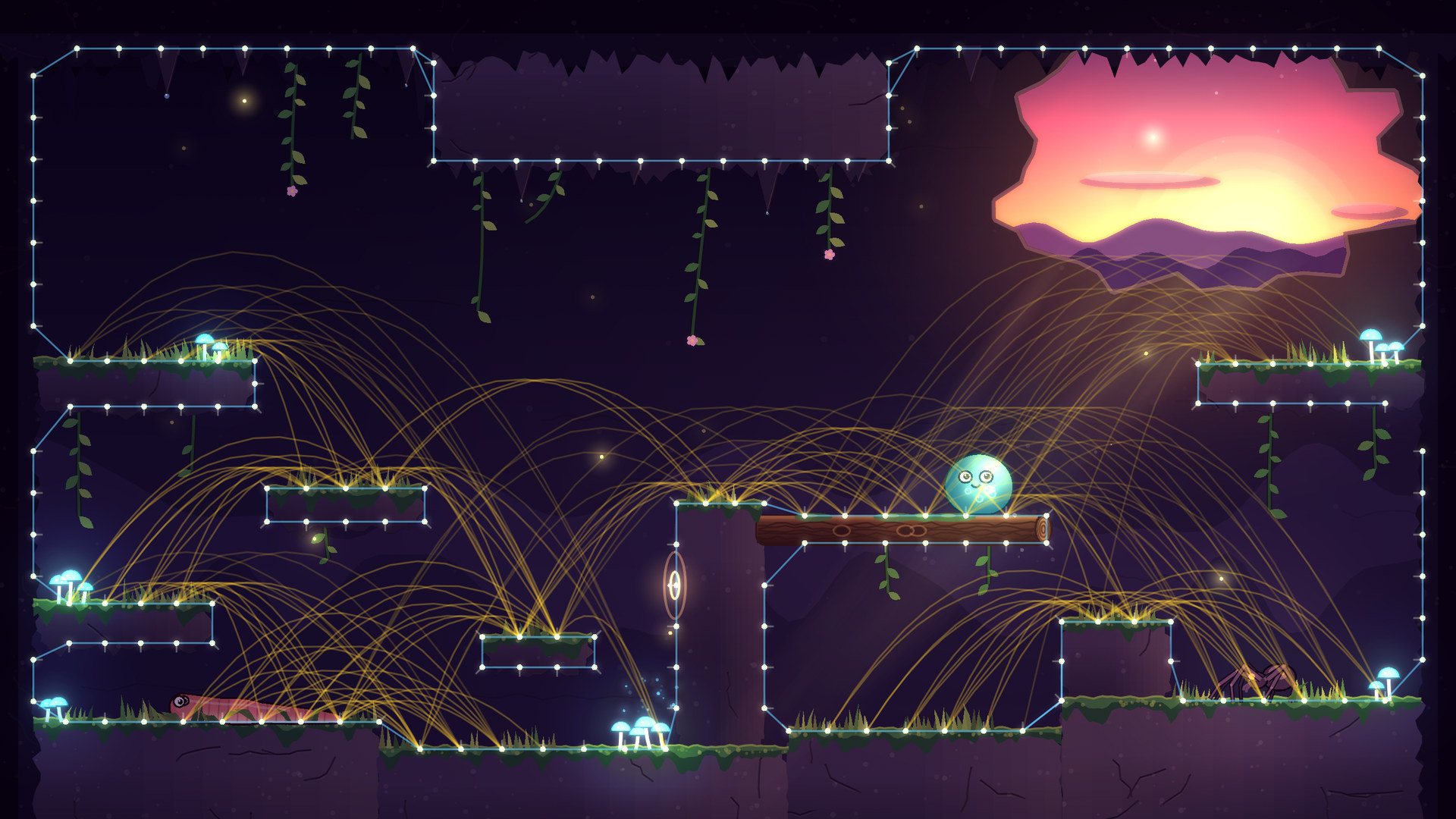
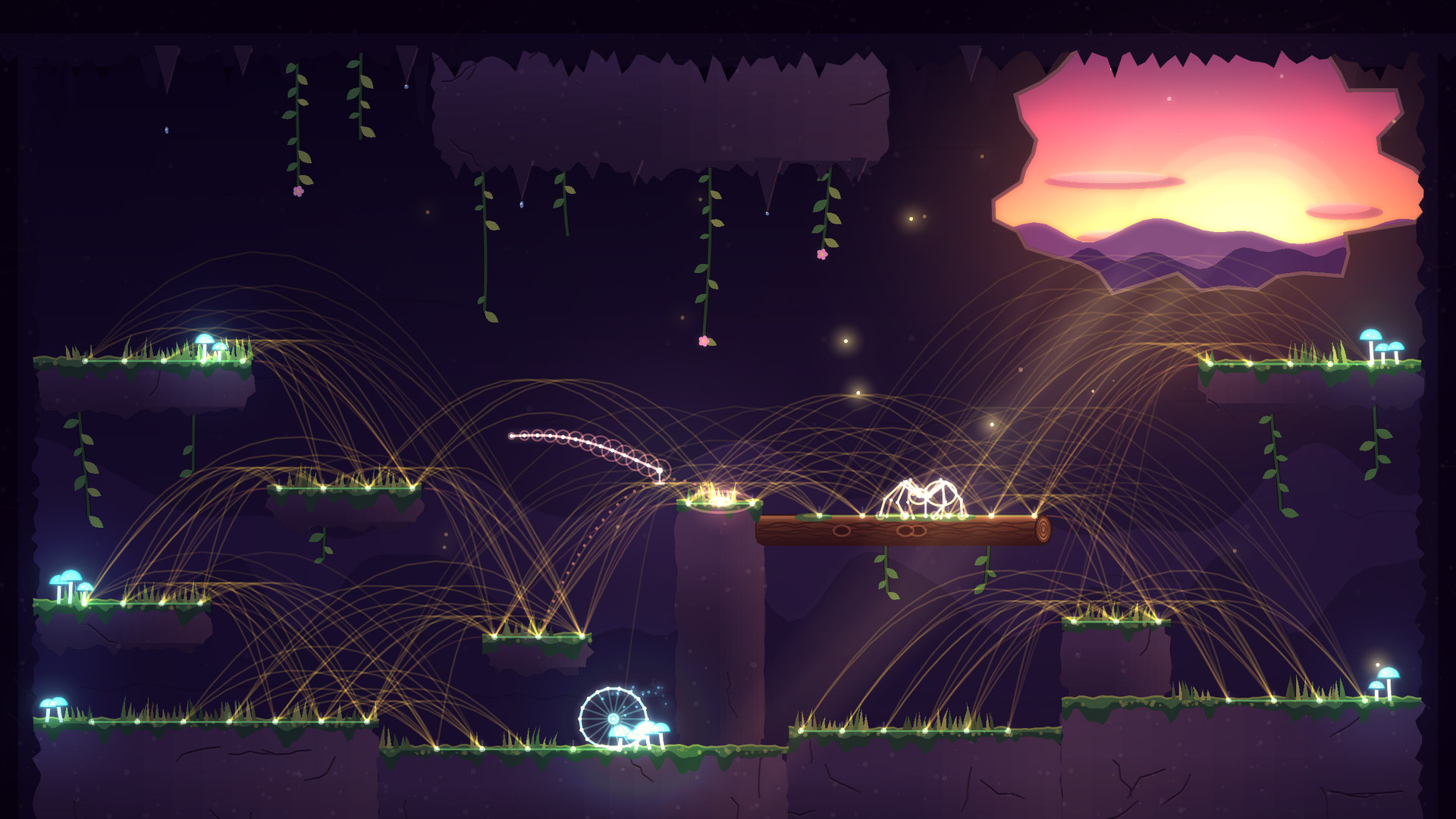
The X key strips the creatures down to what the simulation sees: the worm's chain of points, the blob's ring of edges and the pressure that holds it round, the spider's bones and footholds. Behind them, every jump arc in the graph.
Screenshots
About
Character is a study in procedural creature animation, after Rain World. None of the motion is keyframed. Bodies are made of points, constraints and joints, and move because physics moves them.
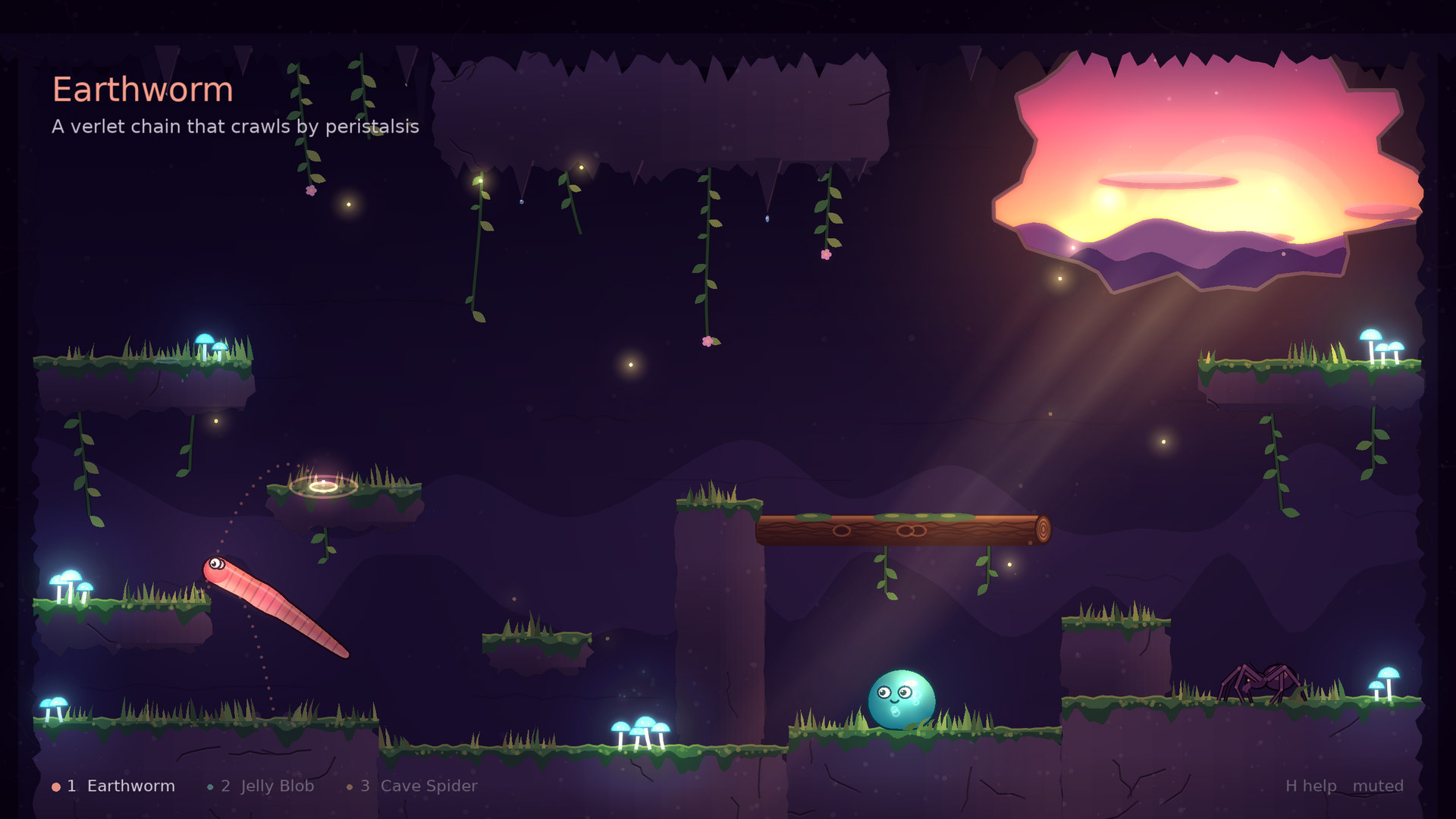
Version 2 puts three creatures in one overgrown cave at dusk. Light pours through a ragged mouth in the rock, shafts of it catch drifting dust, and glowing mushrooms answer from the dark. You guide one creature at a time with a click. The other two get on with their lives: they wander, climb and settle, and the vines and grass part around them as they pass.
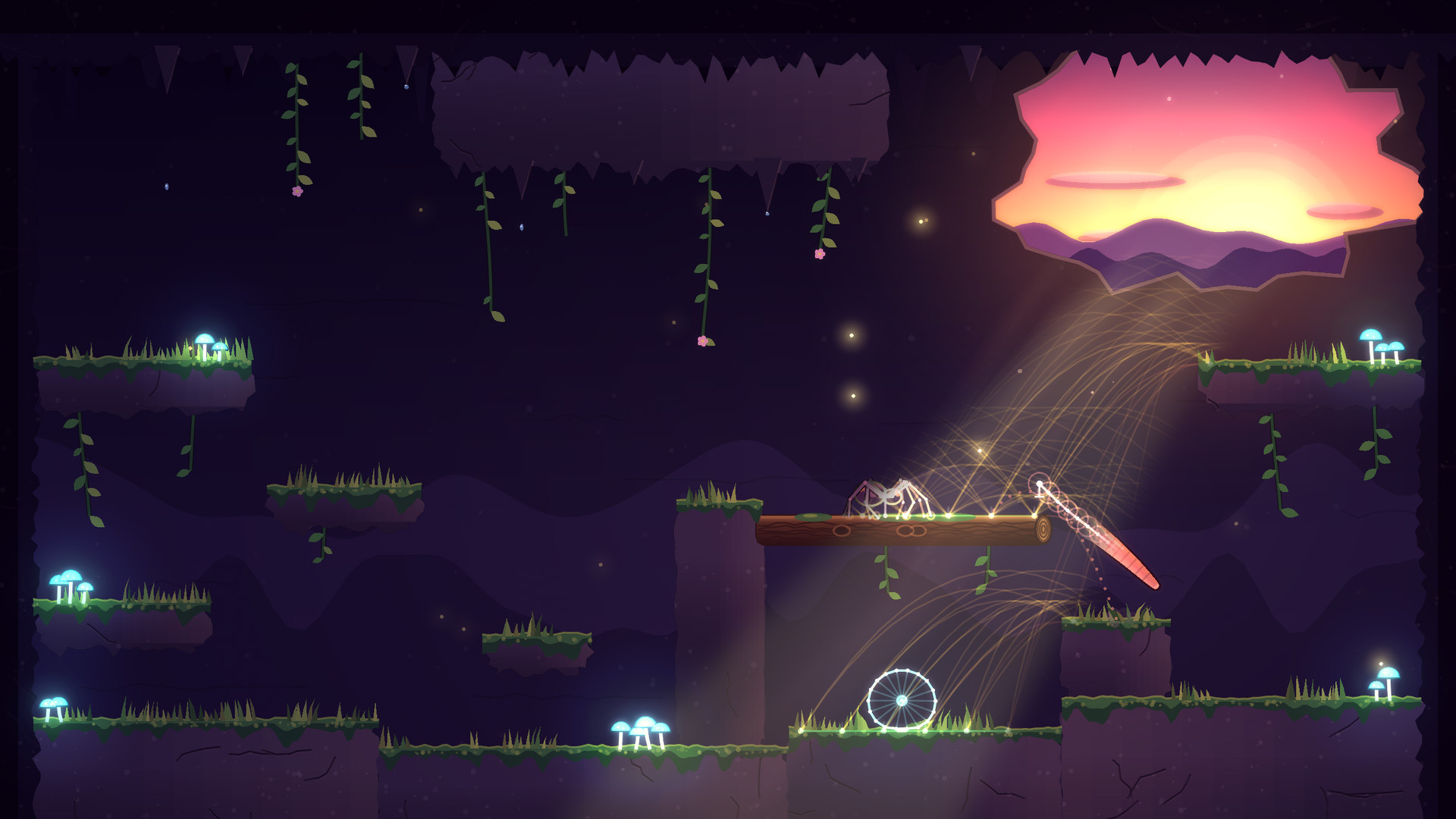
The cover is one frozen instant rendered twice, once as you see it and once as the simulation sees it, then blended inside a shaft of light. Where the sun falls, you see what the creatures are made of. The worm is caught in mid-leap, half skin and half bones.
The Creatures
- Earthworm: a verlet chain that crawls by peristalsis.
- A wave runs tail-ward through the body. Segments bunch, grip the ground and arch, and the head surges forward in time with them.
- Bending stiffness and a little muscle tone let a tail over a ledge droop in a curve instead of hanging straight down.
- It is drawn as a tapered mesh along a smoothed spine, shaded from back to belly with a rim of light from the cave mouth.
- Jelly Blob: a pressure soft body.
- A ring of points is held by edge constraints and a single area constraint, solved position-based so it never explodes.
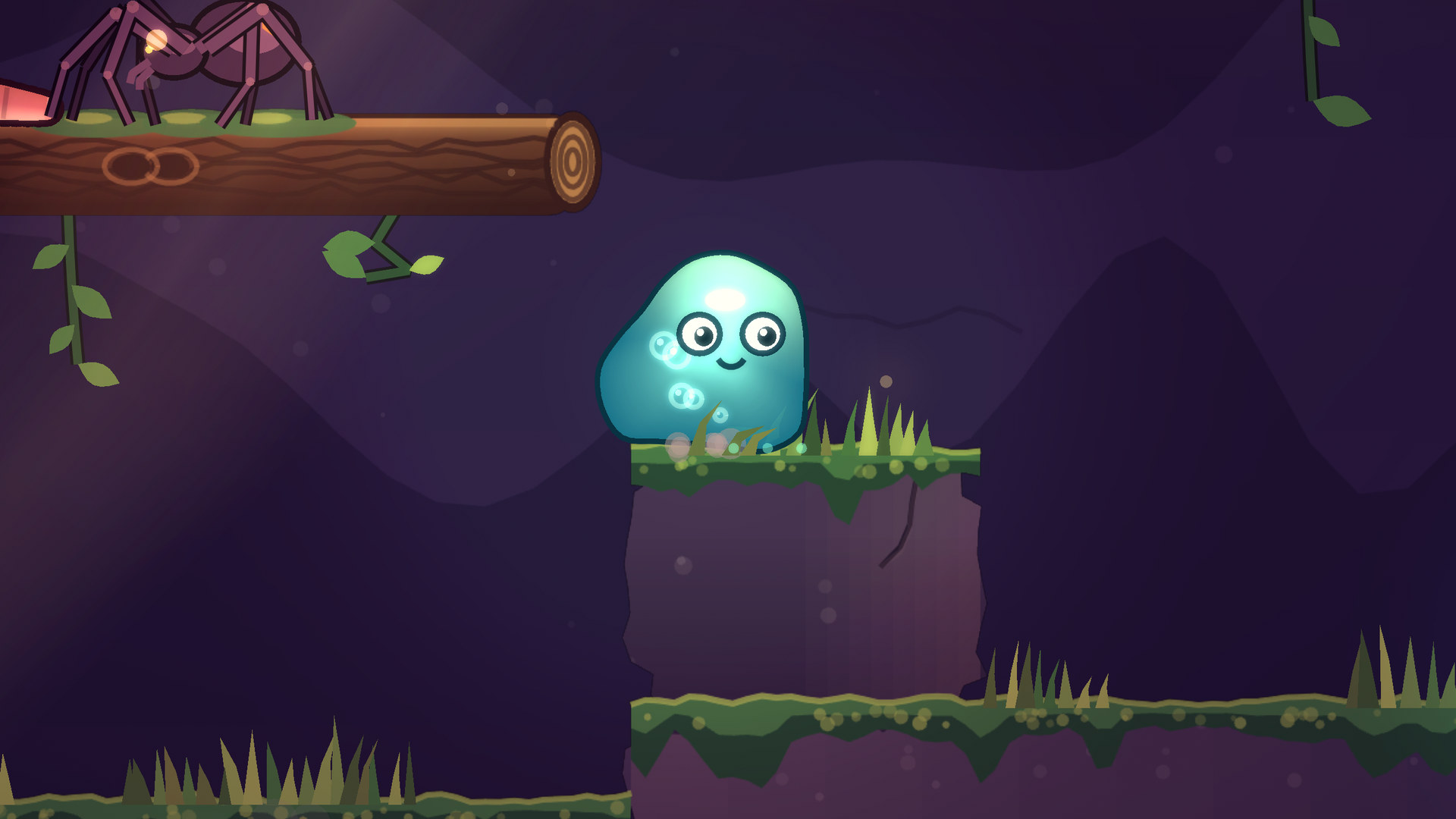
- It rolls as it travels and squats into its jumps as its pressure drops. When it lands, the squash is real: the body keeps falling into the floor for a moment.
- Cave Spider: eight FABRIK legs on a body that can ride any surface.
- Each foot has a rest spot that is projected onto real geometry with raycasts. When a planted foot falls behind, it lifts and arcs to the new spot, in two alternating groups of four.
- The body turns to match the surface beneath its feet, so walls and ceilings are just more floor.
How They Find Their Way
Each creature gets its own navigation graph, built from its body: its size, its reach and what it can climb.
- Walk and crawl edges follow surfaces. The spider’s graph wraps every exposed face and corner of the cave.
- Jump and fall edges exist only if a real ballistic arc, flown by a body of that size, misses every rock.
The graph and the controller use the same jump solver. A path the creature is offered is one it can actually fly. A* plans the route, the controller lines up each takeoff and steers the landing, and it replans if something goes wrong.
The trick is the one Rain World uses. Every creature rides an exact kinematic anchor, so navigation is precise, and the soft physical body hangs off that anchor, free to be loose and expressive.
The Cave
- Rock is baked from simple collision boxes into organic stone: lit lips, cracks and soft moss caps with hanging tongues.
- Light is a light map multiplied over the scene. Dusk light pours through the mouth and shafts of it angle into the cave. Mushrooms glow, fireflies drift, the blob shines faintly, and a soft lantern follows whichever creature you are guiding.
- Life:
- Verlet vines swing aside when something brushes past.
- Spring grass leans away underfoot.
- Mushrooms squash, flare and breathe out spores.
- Water drips from stalactites and splashes.
- Sound is synthesized:
- The worm chirps and thumps, and the blob squelches.
- The spider ticks on every footfall.
- Drips carry their own echo.
- Each creature has its own sound, and the others are mixed quieter so the one you guide stays in focus.
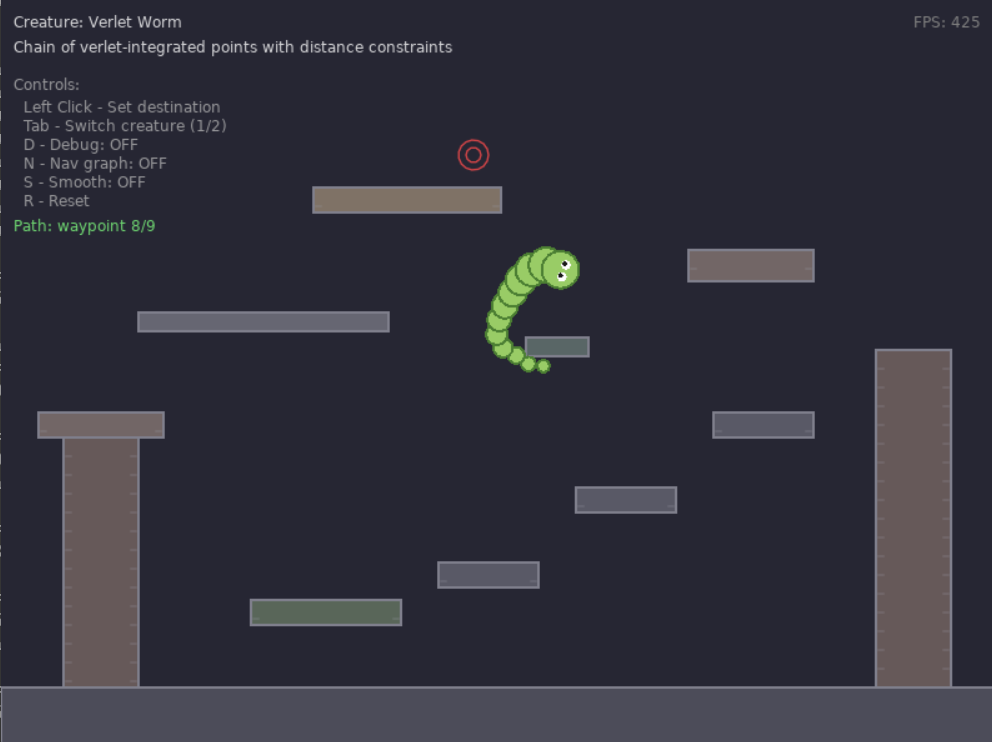
The last screenshot is where this started in January: two creatures on grey platforms.
Under the Hood
The simulation runs at a fixed 120 steps a second, interpolated for display, so it behaves identically on every machine. A self-test proves it. The test also sends each creature on over a hundred trips between random spots in the cave and checks that every one arrives, and that no surface is unreachable or a trap.
These stills and videos were rendered by the program itself, offscreen and frame-exact, from scripted scenes.
Technical Details
- Language: Lua
- Framework: LÖVE 2D, with LoveLibs for scaling, post-processing, ambient music and verlet vines
- Physics: Verlet integration, position-based soft bodies (edge and area constraints), FABRIK inverse kinematics
- Navigation: Per-creature graphs with ballistic jump validation, and A* search
- Rendering: Baked procedural stone, multiplied light maps, bloom and colour grading
- Audio: Procedural synthesis